We remain fully operational. Our teams are working around the clock to ensure your deliveries continue safely.

下载应用程序


Buy anything from 5,000+ international stores. One checkout price. No surprise fees. Join 2M+ shoppers on Desertcart.
Desertcart purchases this item on your behalf and handles shipping, customs, and support to Macau.
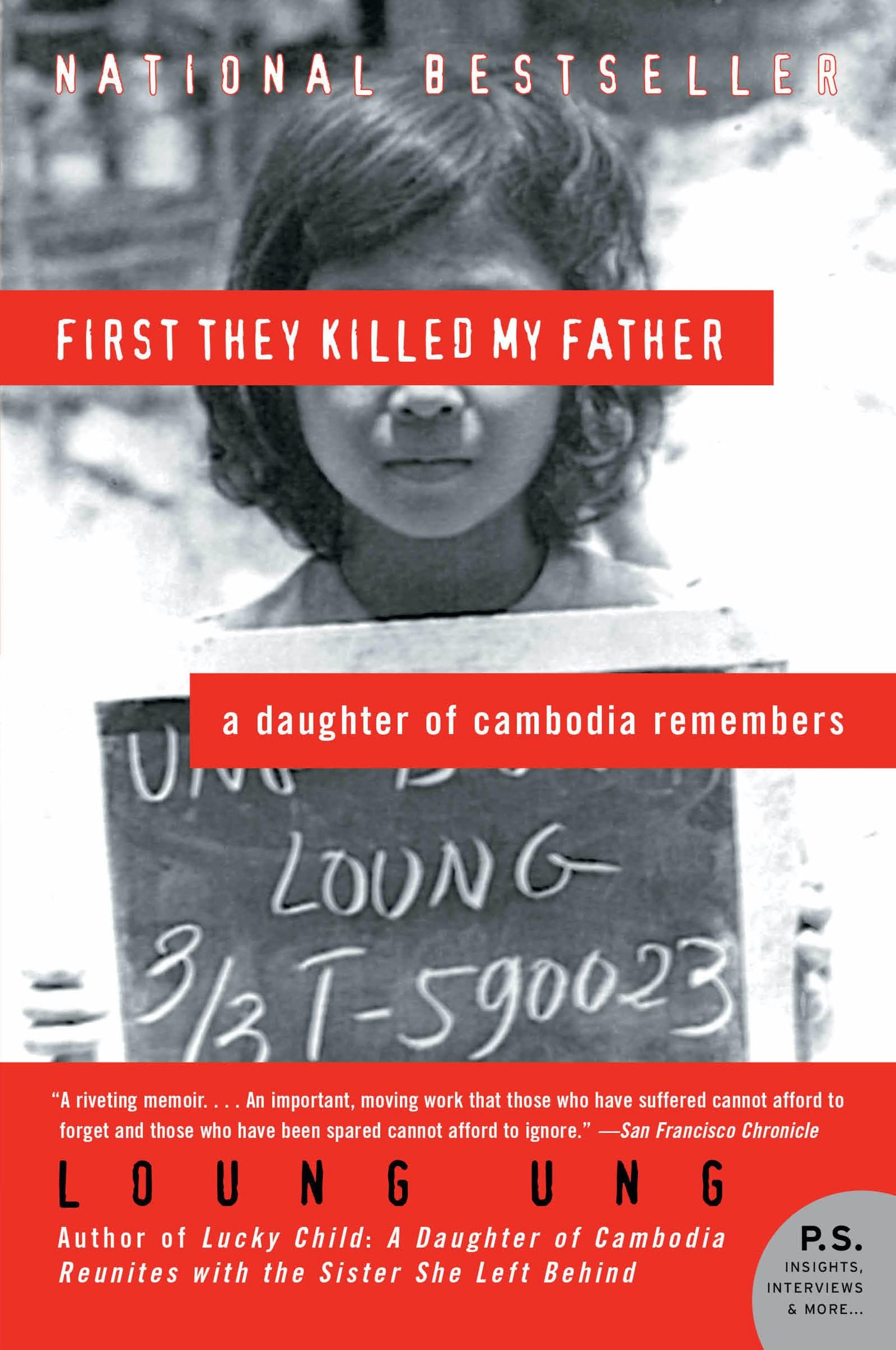
desertcart.com: First They Killed My Father: A Harrowing Story of Survival, Family, and Courage Under the Khmer Rouge: 9780060856267: Ung, Loung: Books Review: A timely lesson for today's world - It has been more than 40 years since the black-uniformed columns of the Khmer Rouge rolled into Phnom Penh and changed the life of a 5-year old girl named Loung Ung forever. With the benefit of distance, it may be all too easy to dismiss the horrors of that era to a distant corner of memory, or to brush it off as a bizarre aberration of history. That would be a mistake. Communism as an ideology may be bankrupt, but the specter of Utopian extremism lives on. Many young men and women who flock to ISIS today are fired by the same misguided zealotry, the same disdain for common human decency in the name of a supposedly better world, that brought young men and women into the folds of the Khmer Rouge 40, 50, and 60 years ago. In fact, the parallels are chilling - like many leading figures of ISIS, Al Qaeda, and the Taliban today, the leaders of the Khmer Rouge were by and large teachers. They wrote beautifully, if somewhat naively, of a return to innocent rural simplicity. They impressed their students with their erudition, simplicity of living, and apparent dedication. How can such earnest people do any wrong? Many will find out at the cost of their lives. Loung Ung's autobiography is a moving memorial to all the lives lost in that deranged quest for Utopia. In the eyes of the Angkar (the Khmer Rouge "organization"), liquidating the members of the old regime is but a necessary prelude to building a society of true believers. And if the Angkar believes that each hectare can yield 3 tons of rice (even though the best yield before the war was only 1 ton/hectare), then it must be achievable if everybody just works hard enough. The starry-eyed school-teachers of yesteryear who dreamed of an agrarian paradise had become totally out of touch. And with the absolute power they wielded, nobody was about to tell them otherwise. The result was mass famine as local cadres starved the people to turn in their production quota. As millions perished, the top leadership witch-hunted for "saboteurs" and berated their subjects for lack of revolutionary fervor. Ung's book is full of vivid descriptions and keen observations that bring the vicissitudes of that era poignantly to life. Many passages are naturally cinematic. These include: - Her idyllic family life in pre-KR Phnom Penh. The author was young, but her memory is sharp. Her colourful description of early 1970's Phnom Penh with its many exotic (to an American audience) sights, sounds, and colors is an adventure in itself; - The arrival of the KR in Phnom Penh. A moment of high historical drama, but perhaps the author was too young to remember the details. This is where Chanrithy Him's dramatic account offers some truly memorable moments; - Getting through the KR check points on the way out of Phnom Penh, as KR soldiers systematically rounded up all former members of the old regime. Most would be executed within days; - A widow who took refuge with the author's family, tenderly talking to the baby that she carried with her everywhere, refusing to accept that he was already dead; (p.86) - The ritual brainwashing of children at a child labor camp, with the clapping, the chanting of "Angkar!", the endless repetition of propaganda; - Loung's savage attack against one of her tormentors, a bully in the children's labour camp who despised her because of her light skin. Even as a 7-year old she dreamed of the day when she'd have the power to come back to look for the bullies and "beat them until she was tired". She vowed never to forget. Her sweet-natured sister couldn't understand why she wanted to retain such horrible memories. But as Loung explained, she needed the anger, the thoughts of retribution, to fill the bottomless sadness in her soul. I've always said that anger, or at least righteous indignation, is a much under-rated emotion. It needs to be controlled. It needs to be properly-channeled. But it's the juice that drives much social progress. Finally, a few observations about the author's family background. A few readers took offense at the author's perceived lack of sensitivity. Perhaps she took too much pride in her family's light skin, high status, and economic prosperity. Reading her account of her family's encounter with the villagers in the KR base areas, it's quite evident there was much class resentment and perhaps plain-old jealousy on the part of the country folk. Even to this day many villagers in the old KR base areas seem to recall that era wistfully - Pol Pot's cremation site seems to have become something of a shrine. No doubt the villagers didn't enjoy the regimentation, but it was a topsy-turvy time when poor people like themselves could feel superior to the city folk who probably looked down on them. Not that the Khmer Rouge cadres themselves were particularly holy, of course. Plenty were mere opportunists. The Khmer Rouge village chief who lorded over the "new people" ate better, dressed better, and was apparently not above trading extra food for gold at exorbitant prices. (Ironically his corruption probably saved some lives, because life definitely got a lot harder after Angkar tightened things up and sent more soldiers into the villages.) As for Pol Pot, the young Loung Ung knew almost nothing about him, except that he was "fat" in a country of living skeletons. A postscript: Those readers who are interested in how Loung and her siblings fared after the war may be interested in reading her second book, Lucky Child. While some readers may find the events in her later life less dramatic, I found it equally fascinating to read about her endeavors to come to terms with her past while trying to make a new life for herself in America. Like many children from similar backgrounds, she went through a phase when she attempted to cut all ties with her past (to the point of deliberately avoiding contact with her siblings) and plunged headlong into mainstream American youth culture. As she got older, she discovered that she could only conquer the ghosts of her past by embracing her roots, and to rise above her personal losses (and petty personal vengeance) by making them her life-long cause. While my own life experiences were nowhere nearly as dramatic as Luong's, there are enough similarities that what she wrote rang true to me and resonated. Well worth a read. Review: Important and ...Compelling! - "First They Killed My Father..." - I think it's important that you read this narrative. I think it's important for everyone to read it. It's important that you understand how it happened, and more importantly, how it could easily happen to you and yours. Five stars is simply not enough. The author was just a little girl, five years old. She knew nothing about the politics or the wars or the conflicts. She was just playing with friends and playing dress-up for fun. And just like it was for you as a little kid, for that little Cambodian girl, everything was just happy and games and wonderful. And suddenly, yes, to the little girl, it was sudden. For her, there was no warning - how could there be? She didn't know anything about politics or civil war. She was happy and laughing one moment, then the family was forced out of their home - the only home she'd ever known. She was scared and nervous and sad, she couldn't understand what was happening. She wanted to go home, that's all, just that simple. "Why can't we go home now, Pa?" Yes, why not. Read this book. Please, for your own sense of security and the wellbeing of you and your family; for your own sense of what's right and just in the world, read this book. Don't think that it's all about civil war or combat or the horrors of war or terrorist crimes; it's about living life as a frightened refugee, fearful and afraid and worried in your own country. It's not a horrible reading experience, it's intensely compelling. And it's intensely important for you to read this story. Horrible things happen, it happens in our world, it's on the news all the time, it's in the news right now. Read this narrative, and the next time something like this is on the news, you'll know - deep in your heart and soul - you'll know, and you'll feel. And it won't be just plain old sympathy, it'll be knowing. This narrative is told in first person, from the perspective of the little girl as she lived it ...a little girl who struggles to live even as she tries desperately to understand what's happening to herself and her family and her friends. This story is important to know, to understand, to feel deep in your heart and soul. This book deserves to be read and thought about and understood (as well as anyone can) by every single living person in every nation of the world. It could happen to you and yours. The little Cambodian girl didn't think anything could keep her from laughing and loving and playing and having fun either ...but something did. Drastically, and for years, yes, for years! I can tell you right now, in all honesty, I could not have endured what that little girl endured. I could not, and probably would not, have lived through what she did. Many thousands did not - grown men and women did not live, yet this little girl fought every day to live, and she survived. Read this book! I can sincerely predict that you will be glad to have read this book. If you read it, when you read it, you'll be grateful that that little Cambodian girl wrote her story for you. Read it, you'll thank me. Read it, you'll thank that little girl for her extraordinary courage and resilience. This story is not like you think it is. There is little to no overt violence or undue descriptive passages of death and killing. This is not a work on or about combat or the civil war itself. This work is about the everyday lives of the refugees who are struggling to survive in their world that has been turned upside down and inside out. Read this story, you'll be thankful that you did. If I could, I'd give it far more than five stars. Patrick
| Best Sellers Rank | #24,994 in Books ( See Top 100 in Books ) #7 in Southeast Asia History #63 in Political Leader Biographies #858 in Memoirs (Books) |
| Book 1 of 3 | A Daughter of Cambodia |
| Customer Reviews | 4.6 4.6 out of 5 stars (7,024) |
| Dimensions | 5.31 x 0.65 x 8 inches |
| Edition | First Harper Perennial trade edition, 2006, 4th printing |
| ISBN-10 | 0060856262 |
| ISBN-13 | 978-0060856267 |
| Item Weight | 2.31 pounds |
| Language | English |
| Print length | 238 pages |
| Publication date | April 4, 2006 |
| Publisher | Harper Perennial |
D**.
A timely lesson for today's world
It has been more than 40 years since the black-uniformed columns of the Khmer Rouge rolled into Phnom Penh and changed the life of a 5-year old girl named Loung Ung forever. With the benefit of distance, it may be all too easy to dismiss the horrors of that era to a distant corner of memory, or to brush it off as a bizarre aberration of history. That would be a mistake. Communism as an ideology may be bankrupt, but the specter of Utopian extremism lives on. Many young men and women who flock to ISIS today are fired by the same misguided zealotry, the same disdain for common human decency in the name of a supposedly better world, that brought young men and women into the folds of the Khmer Rouge 40, 50, and 60 years ago. In fact, the parallels are chilling - like many leading figures of ISIS, Al Qaeda, and the Taliban today, the leaders of the Khmer Rouge were by and large teachers. They wrote beautifully, if somewhat naively, of a return to innocent rural simplicity. They impressed their students with their erudition, simplicity of living, and apparent dedication. How can such earnest people do any wrong? Many will find out at the cost of their lives. Loung Ung's autobiography is a moving memorial to all the lives lost in that deranged quest for Utopia. In the eyes of the Angkar (the Khmer Rouge "organization"), liquidating the members of the old regime is but a necessary prelude to building a society of true believers. And if the Angkar believes that each hectare can yield 3 tons of rice (even though the best yield before the war was only 1 ton/hectare), then it must be achievable if everybody just works hard enough. The starry-eyed school-teachers of yesteryear who dreamed of an agrarian paradise had become totally out of touch. And with the absolute power they wielded, nobody was about to tell them otherwise. The result was mass famine as local cadres starved the people to turn in their production quota. As millions perished, the top leadership witch-hunted for "saboteurs" and berated their subjects for lack of revolutionary fervor. Ung's book is full of vivid descriptions and keen observations that bring the vicissitudes of that era poignantly to life. Many passages are naturally cinematic. These include: - Her idyllic family life in pre-KR Phnom Penh. The author was young, but her memory is sharp. Her colourful description of early 1970's Phnom Penh with its many exotic (to an American audience) sights, sounds, and colors is an adventure in itself; - The arrival of the KR in Phnom Penh. A moment of high historical drama, but perhaps the author was too young to remember the details. This is where Chanrithy Him's dramatic account offers some truly memorable moments; - Getting through the KR check points on the way out of Phnom Penh, as KR soldiers systematically rounded up all former members of the old regime. Most would be executed within days; - A widow who took refuge with the author's family, tenderly talking to the baby that she carried with her everywhere, refusing to accept that he was already dead; (p.86) - The ritual brainwashing of children at a child labor camp, with the clapping, the chanting of "Angkar!", the endless repetition of propaganda; - Loung's savage attack against one of her tormentors, a bully in the children's labour camp who despised her because of her light skin. Even as a 7-year old she dreamed of the day when she'd have the power to come back to look for the bullies and "beat them until she was tired". She vowed never to forget. Her sweet-natured sister couldn't understand why she wanted to retain such horrible memories. But as Loung explained, she needed the anger, the thoughts of retribution, to fill the bottomless sadness in her soul. I've always said that anger, or at least righteous indignation, is a much under-rated emotion. It needs to be controlled. It needs to be properly-channeled. But it's the juice that drives much social progress. Finally, a few observations about the author's family background. A few readers took offense at the author's perceived lack of sensitivity. Perhaps she took too much pride in her family's light skin, high status, and economic prosperity. Reading her account of her family's encounter with the villagers in the KR base areas, it's quite evident there was much class resentment and perhaps plain-old jealousy on the part of the country folk. Even to this day many villagers in the old KR base areas seem to recall that era wistfully - Pol Pot's cremation site seems to have become something of a shrine. No doubt the villagers didn't enjoy the regimentation, but it was a topsy-turvy time when poor people like themselves could feel superior to the city folk who probably looked down on them. Not that the Khmer Rouge cadres themselves were particularly holy, of course. Plenty were mere opportunists. The Khmer Rouge village chief who lorded over the "new people" ate better, dressed better, and was apparently not above trading extra food for gold at exorbitant prices. (Ironically his corruption probably saved some lives, because life definitely got a lot harder after Angkar tightened things up and sent more soldiers into the villages.) As for Pol Pot, the young Loung Ung knew almost nothing about him, except that he was "fat" in a country of living skeletons. A postscript: Those readers who are interested in how Loung and her siblings fared after the war may be interested in reading her second book, Lucky Child. While some readers may find the events in her later life less dramatic, I found it equally fascinating to read about her endeavors to come to terms with her past while trying to make a new life for herself in America. Like many children from similar backgrounds, she went through a phase when she attempted to cut all ties with her past (to the point of deliberately avoiding contact with her siblings) and plunged headlong into mainstream American youth culture. As she got older, she discovered that she could only conquer the ghosts of her past by embracing her roots, and to rise above her personal losses (and petty personal vengeance) by making them her life-long cause. While my own life experiences were nowhere nearly as dramatic as Luong's, there are enough similarities that what she wrote rang true to me and resonated. Well worth a read.
P**S
Important and ...Compelling!
"First They Killed My Father..." - I think it's important that you read this narrative. I think it's important for everyone to read it. It's important that you understand how it happened, and more importantly, how it could easily happen to you and yours. Five stars is simply not enough. The author was just a little girl, five years old. She knew nothing about the politics or the wars or the conflicts. She was just playing with friends and playing dress-up for fun. And just like it was for you as a little kid, for that little Cambodian girl, everything was just happy and games and wonderful. And suddenly, yes, to the little girl, it was sudden. For her, there was no warning - how could there be? She didn't know anything about politics or civil war. She was happy and laughing one moment, then the family was forced out of their home - the only home she'd ever known. She was scared and nervous and sad, she couldn't understand what was happening. She wanted to go home, that's all, just that simple. "Why can't we go home now, Pa?" Yes, why not. Read this book. Please, for your own sense of security and the wellbeing of you and your family; for your own sense of what's right and just in the world, read this book. Don't think that it's all about civil war or combat or the horrors of war or terrorist crimes; it's about living life as a frightened refugee, fearful and afraid and worried in your own country. It's not a horrible reading experience, it's intensely compelling. And it's intensely important for you to read this story. Horrible things happen, it happens in our world, it's on the news all the time, it's in the news right now. Read this narrative, and the next time something like this is on the news, you'll know - deep in your heart and soul - you'll know, and you'll feel. And it won't be just plain old sympathy, it'll be knowing. This narrative is told in first person, from the perspective of the little girl as she lived it ...a little girl who struggles to live even as she tries desperately to understand what's happening to herself and her family and her friends. This story is important to know, to understand, to feel deep in your heart and soul. This book deserves to be read and thought about and understood (as well as anyone can) by every single living person in every nation of the world. It could happen to you and yours. The little Cambodian girl didn't think anything could keep her from laughing and loving and playing and having fun either ...but something did. Drastically, and for years, yes, for years! I can tell you right now, in all honesty, I could not have endured what that little girl endured. I could not, and probably would not, have lived through what she did. Many thousands did not - grown men and women did not live, yet this little girl fought every day to live, and she survived. Read this book! I can sincerely predict that you will be glad to have read this book. If you read it, when you read it, you'll be grateful that that little Cambodian girl wrote her story for you. Read it, you'll thank me. Read it, you'll thank that little girl for her extraordinary courage and resilience. This story is not like you think it is. There is little to no overt violence or undue descriptive passages of death and killing. This is not a work on or about combat or the civil war itself. This work is about the everyday lives of the refugees who are struggling to survive in their world that has been turned upside down and inside out. Read this story, you'll be thankful that you did. If I could, I'd give it far more than five stars. Patrick
L**Y
Loung Ung's narrative of her experiences under the Pol Pot regime are like reading 'The Killing Fields' and even though you may have seen the movie, her deeply moving description of the horrors she and her family lived through can still make your hairs stand on end. Everyone should read this book and recommend it to their young-adult children.
A**R
I’m not much of a reader, but, this is special. The amount of detail that she goes into, the horrific situation she and millions of others were placed in needs to be heard and read. Don’t settle for the movie, read the story. You won’t regret it!
A**R
A five year old girl's journy into war, death of her parents and siblings because of the injustice and hunger. In my opinion any one who think 1. modernization is not good. 2. Nature is like a mother. 2. Socialism is great must read this book. This book is great because it deals with the consequences of the dumbest political philosophy of all time a combination of communism/socialism and agrarian philosophy is put into practice in the best way possible.
B**N
Must be read!! Powerful and moving... Now buying the sequel... How can humans continue to make such horrible disasters? A young girls fight to live through an era best forgotten.
L**G
Reading this book took me on such an emotional journey. Thank you Loung Ung for sharing your story. As sad and harrowing as it was read it was a priviledge to know both your story and the story of others mentioned in the book. Every young person should read this book to appreciate the fortunate lives most live, and to comprehend the misfortunes and suffering of those that have lived and continue to live in places of conflict and famine. One of my favourite books in a long time.