![Vivre sa vie (The Criterion Collection) [DVD]](https://m.media-amazon.com/images/I/81CIgBWQwFL._AC_SL3840_.jpg)

Vivre sa vie (The Criterion Collection) [DVD]
Product ID: 15082453
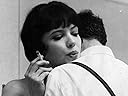
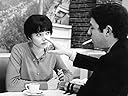
Jean-Luc Godard and the French New Wave were at the height of their power and creativity when Godard released Vivre Sa Vie ( Living Her Life ) in 1962. And watching it again, years later, instantly transports one to the era where an offhand remark, a lazy circle of cigarette smoke, a sidelong glance, a disaffected "I don't care about you" could all communicate deep, conflicted longing, alienation, postwar malaise, and infinite possibility. In fact, watching Vivre Sa Vie , starring Godard's lovely muse, Anna Karina, is at once both enervating--and exhilarating. The film is subtitled Film en Douze Tableaux , and the story shows Karina as Nana in 12 different short films, snapshots of her lonely, seemingly aimless life--in scenes that stay with the viewer for days afterward. In the very first tableau, Nana and a former lover, Paul (André S. Labarthe), are having a sad, disjointed conversation in a café--are they breaking up? Getting back together? The pain and power of the scene lies in its ambiguousness. And Godard and his brilliant cinematographer, Raoul Coutard, shoot this initial scene, of the most intimate conversation between two lovers, entirely from behind them. The sad, longing remarks, barbs, halfhearted entreaties--they are all communicated while the viewer looks just at the back of Karina's sleek black bob and Labarthe's scruffy hair. Only near the end of that scene, as the viewer is practically craning forward to connect to the characters, do we get a glimpse of half of a cheek, one eyebrow. And from this moment, Godard and the cast have the viewer enthralled. In a later tableau, we watch long, uninterrupted scenes of The Passion of Joan of Arc --in itself a treat--and the supposedly disaffected heroine Nana weeping rivers of tears, silently, in the theater. There are many layers to this lovely young woman, and each of the 12 snapshots of her life reveals more. Nana's life becomes a tragedy, as she descends into prostitution--yet along the way, her luminescence is revealed in small ways. In one scene, she recalls a writing exercise from when she was a child. "Birds are creatures with an outside, and an inside," she recites. "When you remove the outside, you see the inside. When you remove the inside, you see the soul." The shattering beauty of Vivre Sa Vie is that Godard and Karina allow us to see the outside, then the inside, and then finally, the soul. The Criterion Collection edition offers true cinema riches, especially in an interview with Karina from 1962, several modern commentaries putting Godard and the film in its historical context, reportage from early-'60s France on the dire situation of prostitutes at the time, a booklet of film criticism, and much more. -- A.T. Hurley Vivre sa vie was a turning point for Jean-Luc Godard and remains one of his most dynamic films, combining brilliant visual design with a tragic character study. The lovely Anna Karina, Godard's greatest muse, plays Nana, a young Parisian who aspires to be an actress but instead ends up a prostitute; her downward spiral is depicted in a series of discrete tableaux of daydreams and dances. Featuring some of Karina and Godard's most iconic moments - from her movie theater vigil with the Passion of Joan of Arc to her seductive pool-hall strut - Vivre sa vie is a landmark of the French New Wave that still surprises at every turn. Review: people and their bad faith, and driving against the forces that threaten ... - In the character of Nana Anna Karina explores Godard's thoughts and feelings about art, and how open-ended this precious gift is, in terms of articulation, whether through acting (Anna Karina), writing as Poe does, or Plato, or Hegel or Nietzsche. Godard does not define, or create a film as a lesson on life's hazards, filled moral prescriptions , antidotes, hand-me-down phrases that only bring one closer to life, to Nature that is mortal and very destructive. (Witness te close of the film.) Nietzsche says that art is not an imitation of nature at all, but is rather a metaphysical supplement, raised along side Nature only to overcome Nature. I agree. And Godard seems to be on this wavelength, but would never reveal it. Closeness to the world in art is not art for Godard. Distancing, almost barricading the self from the world in order to come towards it with assurance and strength represents the artistic nature overagainst the non-artistic mundane, so-called real world. Nana tries to transcend a Paris that is unkind to her, manipulative, and very dangerous. She does in a way overcome, retreat from the closeness to the world as a prostitute. But this life is too insistent on ignorance, irrationality, sickness, and death to be liberating. Nana hasn't the strength to be the actress she desires to be, could be. She is too close to oblivion, the way art can be threatened by oblivion, as Godard shows as he explores the relation between being driven by matter, things, people and their bad faith, and driving against the forces that threaten to obliterate the mind and its memories. Beautifully acted, Vivre Sa Vie is a major benchmark in the history of cinema..indeed art. Review: Inspiring though Tragic - The tragic story of a beautiful young French woman who works in a record store near the Arch of Triumph but as in the case of many jobs in Paris-France the job pays next to nothing and she is forced into prostitution. Many cases were like that in Paris at the time. This movie is not really fictional
| Contributor | Andr S. Labarthe, Anna Karina, Brice Parain, Dimitri Dineff, Eric Schlumberger, Grard Hoffman, Guylaine Schlumberger, Henri Attal, Jean-Luc Godard, Marcel Sacotte, Monique Messine, Paul Pavel, Peter Kassovitz, Sady Rebbot Contributor Andr S. Labarthe, Anna Karina, Brice Parain, Dimitri Dineff, Eric Schlumberger, Grard Hoffman, Guylaine Schlumberger, Henri Attal, Jean-Luc Godard, Marcel Sacotte, Monique Messine, Paul Pavel, Peter Kassovitz, Sady Rebbot See more |
| Customer Reviews | 4.5 out of 5 stars 127 Reviews |
| Format | Black & White, Full Screen, Multiple Formats, NTSC, Special Edition, Subtitled |
| Genre | Drama |
| Language | French |
| Runtime | 1 hour and 25 minutes |
P**L
people and their bad faith, and driving against the forces that threaten ...
In the character of Nana Anna Karina explores Godard's thoughts and feelings about art, and how open-ended this precious gift is, in terms of articulation, whether through acting (Anna Karina), writing as Poe does, or Plato, or Hegel or Nietzsche. Godard does not define, or create a film as a lesson on life's hazards, filled moral prescriptions , antidotes, hand-me-down phrases that only bring one closer to life, to Nature that is mortal and very destructive. (Witness te close of the film.) Nietzsche says that art is not an imitation of nature at all, but is rather a metaphysical supplement, raised along side Nature only to overcome Nature. I agree. And Godard seems to be on this wavelength, but would never reveal it. Closeness to the world in art is not art for Godard. Distancing, almost barricading the self from the world in order to come towards it with assurance and strength represents the artistic nature overagainst the non-artistic mundane, so-called real world. Nana tries to transcend a Paris that is unkind to her, manipulative, and very dangerous. She does in a way overcome, retreat from the closeness to the world as a prostitute. But this life is too insistent on ignorance, irrationality, sickness, and death to be liberating. Nana hasn't the strength to be the actress she desires to be, could be. She is too close to oblivion, the way art can be threatened by oblivion, as Godard shows as he explores the relation between being driven by matter, things, people and their bad faith, and driving against the forces that threaten to obliterate the mind and its memories. Beautifully acted, Vivre Sa Vie is a major benchmark in the history of cinema..indeed art.
W**E
Inspiring though Tragic
The tragic story of a beautiful young French woman who works in a record store near the Arch of Triumph but as in the case of many jobs in Paris-France the job pays next to nothing and she is forced into prostitution. Many cases were like that in Paris at the time. This movie is not really fictional
S**E
Crude arthouse
In episodic fashion, shows the fall of one woman into poverty and prostitution. To me it felt like a student production, for example in the first scene we see two characters having a conversation, from behind, without being able to see their faces. It's literally just the back of their heads, all hair, not even a little bit of face in profile. It's distracting because I kept wracking my brains trying to see the point in it. Meanwhile, I had no problem seeing the faces of the bartenders as they cleaned coffee mugs or whatever. Even they seemed confused by the situation. Also, it's hard to imagine Anna Karina ending up as a discarded prostitute. Yes, a prostitute can be pretty, but temper it down a bit. They had her flirting with guys who barely even notice. Yeah, I'm sure some guy would just love to play pool by himself, instead of chatting with Anna Karina, who's constantly making eyes at him. Sure! And then he ends up reading novels to her, and trying to take her to the Louvre.
C**.
Godard's character study is one of his strongest films (one of the strongest films period) and Criterion's edition is great
VIVRE SA VIE was Jean-Luc Godard's fourth feature film. The protagonist Nana (Anna Karina) is a young Parisian woman who is not especially bright, but full of life and endowed with great beauty. Unable to make ends meet by working at a record shop, and unable to break into films as she dreams, she starts to work as a prostitute. Postwar French law permitted prostitution, with certain rules and regulations that the film explains in a documentary-like segment. Nana, who yearns to live her life according to her own desires, initially thinks that this new profession has set her free from cares. In fact, Nana's liberation from penury through prostitution only subjects her to new constraints imposed by her pimp and clientele. The film, divided into twelve tableaux with fade-to-black transitions that quicken as it goes on (which one commentator compares to breathing faster and faster) brings us to one of the most shocking endings I have ever seen. This is a superlative film. Clocking in at 85 minutes, it lasts exactly as long as its story demands, with not a single moment that feels superfluous. Everything fits together, perfectly even things that ought to seem extraneous, the overindulgence of the auteur. Early in the film Nana goes to see Carl Dreyer's 1928 silent film "La Passion de Jeanne d'Arc", and this is not a mere gratuitous tribute to earlier cinema as is common in French New Wave films. Nana speaks with an elderly philosopher in a café, who is in fact the real-life philosopher Brice Parain whose dialogue here consists of his own writings, and yet this is not shallow intellectualism. Rather, these scenes increase the three-dimensionality of Nana as a character: not very intelligent and with negligible education, an easy woman since long before the film begins, but feeling strongly that there must be more out there. The believability of Nana as a character is increased all the more by Anna Karina's masterful performance. When coming to Godard's films, after the filmmaker has taken a beating from some circles, one might think that Karina was simply a beauty with no especial talent that enchanted the director due to her looks and foreign origin. Nope, the Danish actress here presents a completely believable Parisian airhead who is so easily moved by sentimental art. Criterion has filled this DVD with some great supplementary features. The audio commentary track is by the delightfully Australian-accented film scholar Adrian Martin, and it draws one's attention to all kind of details that one might have never quite noticed. The major featurette is a video interview with the film scholar Jean Narboni that, again, expands one's appreciation of the film immensely. There is also a television interview from 1962 with Anna Karina and excerpts from a 1961 French television exposé on prostitution.
G**Y
Masterpiece of French Neorealism - With a Terrific Performance by Anna Karina
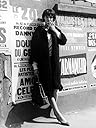
I cannot imagine anyone seeing this movie and ever being able to forget it. The director examines a life (Nana) and offers 12 discrete episodes that jump in time. Taken together, they paint Nana's gradual descent into prostitution...when she runs out of money and loses her dream of becoming an actress. The movie begins with the camera focused on the back of the woman's head, with her face (only) reflected in the mirror. She talks to the mirror, not to her boyfriend beside her, about the pain of the breakup. Another episode involves her being in the audience at a movie theater showing another movie on screen: Carl Dreyer's "The Passion of Joan of Arc". In this episode, Nana silently weeps. (Not coincidentally, Joan of Arc was punished by men for trying to act as one). Then there is the episode where Nana casually allows a man to make love to her for money. This is the first instance she trades sex for money. It is pertinent she resists the man's desperate efforts to kiss her on the mouth. Soon afterwards, there is a scene where a man embraces her in a hotel room while she looks away, all the while emotionally distant - smoking her cigarette. A very powerful episode is one where she dances around a pool table listening to jukebox music - it's a very famous part of the movie. This will be the first...and only time that we glimpse a smile on Nana's face.(Of course, that dance reminds one of her dance in Godard's film "Band of Outsiders"). The tragedy of Nana's life is that bad luck has taken away all her potential for happiness. Ultimately, "Vivre Sa Vie" proceeds towards the inevitable climax when her pimp tries to sell her off to another pimp, as simple chattel. Three matters stick most in my mind about the film. First, the story of prostitution is displayed on the screen without any touch of sentiment or fun. There is no "Pretty Woman" nonsense here. Second, Anna Karina is a radiant actress...and we understand immediately how quickly the director must have fallen in love with her. (They were married at the time of the filming). Third, was the ending in which the camera itself looks down at the sidewalk, almost ashamed of the way this human life is being treated. It is a masterpiece of neorealism, a film that is enhanced by the understated acting of the lead actress.
L**I
One of my favorite Godard films
My Life to Live is a highly stylized and extraordinarily unformulaic adaptation of a simple premise: a young woman, seeking the freedom and excitement of, what Federico Fellini calls La Dolce Vita, leaves her family to pursue an acting career, only to turn to a life of prostitution. From the opening sequence showing a detached, seemingly clinical exhibition of Anna Karina's face and profile, followed by an uneasy dialogue between Nana (Karina) and Paul (Andre-S. Labarthe) filmed at an angle showing the backs of their heads, we are introduced to the singular, iconoclastic vision that is Jean-Luc Godard. Stripped of expression and sentimentality, Godard, nevertheless, succeeds in creating a film that is visually stunning and full of pathos. We are drawn to Anna, not because of her seductive persona or compassionate actions, but because she is humanity, lost and desperate, incapable of comprehending her misery nor articulating her pain (Note the parallel character of Antonio Ricci in Vittorio de Sica's The Bicycle Thief. Godard's revolutionary camerawork transcends nouvelle vague novelty: it serves as a cinematic extension of Nana's soul. The awkward angles and long panning shots during Nana and Paul's conversations reveals the underlying tension and emotional distance between them. Deeply affected (understandably) by Maria Falconetti's performance in Carl Theodor Dreyer's The Passion of Joan of Arc, Nana's conversation proceeds in silent film intertitles - reflecting her own suffering and innate desire to achieve greatness and escape the banality of her sordid life. The seamless camerawork following Nana as she dances uninhibitedly around the billiard room feels intoxicating, almost mesmerizing - a fleeting glimpse of the few brief moments of pure joy she has ever known. My Life to Live is a truly remarkable film: a synthesis of artistic vision and moral tale, suffused with haunting melody, the ballad of a contemporary tragedy.
K**Z
A Good French Film
This was only the second French film I have ever seen and I like it very much. It was a real good stroy from front to finish.
D**Y
Godard reflects chauvinistic tendency of French culture.
Innovative film for its day with regards to rhythm of editing. A couple of cool shots like the stuttering pan shot in the bar/gun scene. Here's the deal, I've watched a lot of Godard's films recently, as I hadn't viewed them for a long time and I remembered them being cool. I watched Breathless, A Band Apart, Contempt and Vivre Sa Vie in the past week and if It wasn't for Contempt I would have to consider the notion that Godard the man is just another chauvinist Frenchmen. I thought Vivre Sa Vie was an opportunity to empower the lead character played by Karina. But she was, yet again, directed to play a pretty flower to be groped by French men. At first I thought Godard was making a statement. But one after another of his films from this era feels unconsciously misogynistic. Its easy to say his films are cool. But are they? Only Contempt explored the notion that women just might be on the receiving end of a raw deal, particularly in France. (Sorry France, but you've got a crap reputation when it comes to sexism...it ain't the 70s anymore President Hollande and Gaston Strauss-Kahn...) Of course, one has to remember the time and place when a piece of art or film is produced, but the true mark of great art is its timelessness. I find a lot of Godard's films just aren't so cool 50 years later. If the men in his films were cool back then, they feel a bit foolish now. A lot of his early films have pale slippery men who look a bit like toads, aggressively groping and bullying women against walls and in closets. (I lived in Paris for 6 months and heard countless stories about men exposing themselves to women on the metro - in fact caught a guy shaking hands with his little friend in front of a friend of mine in a crowded train.) Hell, even the lanky Belmondo looks a bit of a goof mugging and gawking around in Breathless. The women, by contrast, would still seem cool if they weren't directed to be pretty little things who are captive creatures to male salaciousness. I know people think Godard flicks are cool, but I'm just not sure about that anymore. I find the lead male characters a bit embarrassing, frankly. I know, I suck. But go watch Antonioni if you want Euro cool films from the past that explore modern themes like alienation and still hold up today. Just saying...
M**3
Good movie
Interesting
S**M
Des Godard moins connus, à découvrir absolument
Le premier DVD comprend Vivre sa vie (1h20). Le second : les trois courts-métrages de Godard tournés avant A bout de souffle : Tous les garçons s'appellent Patrick, avec Jean-Claude Brialy et Anne Colette (la petite amie de Godard à l'époque, avant qu'il épouse deux autres de ses actrices : Anna Karina et Anne Wiazemsky - décidément, et avec toutes les trois le même prénom !), Charlotte et son Jules, avec Jean-Paul Belmondo (entièrement doublé par Godard !) et... Anne Colette, et Histoire d'eau avec à nouveau Brialy. Chaque court-métrage est précédé d'une présentation par Noël Simsolo, dont deux interviews sont aussi proposées : celle de Jean Narboni sur Vivre sa vie, et de Mathieu Amalric sur les trois courts-métrages. A priori je ne vois pas très bien le rapport entre Vivre sa vie et les trois premiers courts métrages français (il en avait réalisé deux en Suisse avant) de Godard, qui offrent déjà un avant-goût d'A bout de souffle (Charlotte et son Jules) et d'Une femme est une femme (Charlotte et Véronique ou Tous les garçons s'appellent Patrick, pour citer le titre complet !), mais leur point commun est d'être des Godard moins connus mais excellents ! Vivre sa vie est un magnifique portrait de femme, une déclaration d'amour à Anna Karina à travers de magnifiques plans rapprochés de son visage - tout le film est comme vu de son regard, qui transmet chacune de ses émotions avec une grande sensibilité, et "vit sa vie" avec une sorte de distance mélancolique qui impressionne et surprend chez Godard. A noter une brève séquence magique, particulièrement intense où Nana (Anna Karina), laissée seule à sa table de café par son maquereau qui propose de lui présenter un ami (de la même profession), observe fascinée un jeune homme qui écoute la chanson qui sort du juke box : c'est Jean Ferrat qui écoute sa chanson Ma Môme... Bref instant de lumière où Nana entrevoit une autre vie, avant que la chanson soit coupée et qu'on retourne au dialogue des deux "amis" ("c'est une femme du monde ou une pouffiasse, celle-là ?"). Dommage que les dialogues soient parfois inaudibles (superposition d'autres voix, ou bruit de verres dans les cafés !), surtout la voix légère d'Anna Karina ! Je sais, c'est voulu par Godard, mais frustrant, surtout la première scène qui marque la rupture entre Nana et son compagnon Paul : ils sont filmés de dos, comme pour maintenir le spectateur soigneusement à distance ! Déconcertant, mais ne vous arrêtez surtout pas à cela. Les trois courts métrages sont délicieux (Tous les garçons est un petit chef d'oeuvre) et autant d'étapes qui mèneront à A bout de souffle. L'interview de Jean Narboni (à propos de Vivre sa vie) est éclairante, mais celle de Mathieu Amalric sur les courts-métrages hélas de peu d'intérêt, et vraiment pénible car il cherche ses mots tout du long, semble parler parce qu'il est obligé et s'être levé du pied gauche, sans avoir eu le temps de prendre son café ! Indispensable pour tous ceux qui voudraient approfondir leur connaissance de Godard et de la meilleure partie de son oeuvre, très loin de beaucoup de ses films ultérieurs, remplis de blabla et narcissiques.
S**I
Un capolavoro!
Film da vedere nella versione francese (sottotitolata per me che son arrugginito!) Gli sguardi intensi, inquieti, mai sopiti di Anna Karina sembrano accompagnare e tenere sul filo lo spettatore per tutta la durata del film. Una ragazza che dalla provincia ha sete e fame di libertà, e finisce con il trovare un simulacro di questa mercificando il suo corpo. Una storia vera a cui Godard ha dato sensibilità e profondità. Una Parigi che oggi è scomparsa, ma che vive frame dopo frame in questo film bellissimo.
M**S
Merci à BFI pour cette superbe édition
Thank to BFI for having published this French film Godard especially in two different editions (with intertitles in English but also in French) Edition comprehensive and superbly performed with three short films by Godard The Criterion edition is zoned A, this edition allows me to finally see this film in good condition because unfortunately in France is edited unfortunately only big blockbuster US :( Can we expect the release of "La jetée" (1962) by Chris Marker? Merci à BFI d'avoir édité ce film français de Godard surtout dans 2 éditions différentes (avec les intertitres en anglais mais aussi en français) Edition très complète et superbement réalisée avec 3 court métrages de Godard L'édition Criterion est zoné A, cette édition me permet de voir enfin ce film dans de bonne condition car malheureusement en France on édite que malheureusement que les gros blockbuster US :( A quand "La jetée" (1962) de Chris Marker ?
G**E
Vivre sa vie
A meno di 10 euro un film CAPOLAVORO della storia del cinema e con l'aggiunta di alcuni piccoli extra... Normalmente si trova in commercio solo la versione da 15 euro senza nessuna aggiunta, ma questa è senza dubbio la versione migliore! Acquisto consigliatissimo
Trustpilot
2 months ago
2 days ago