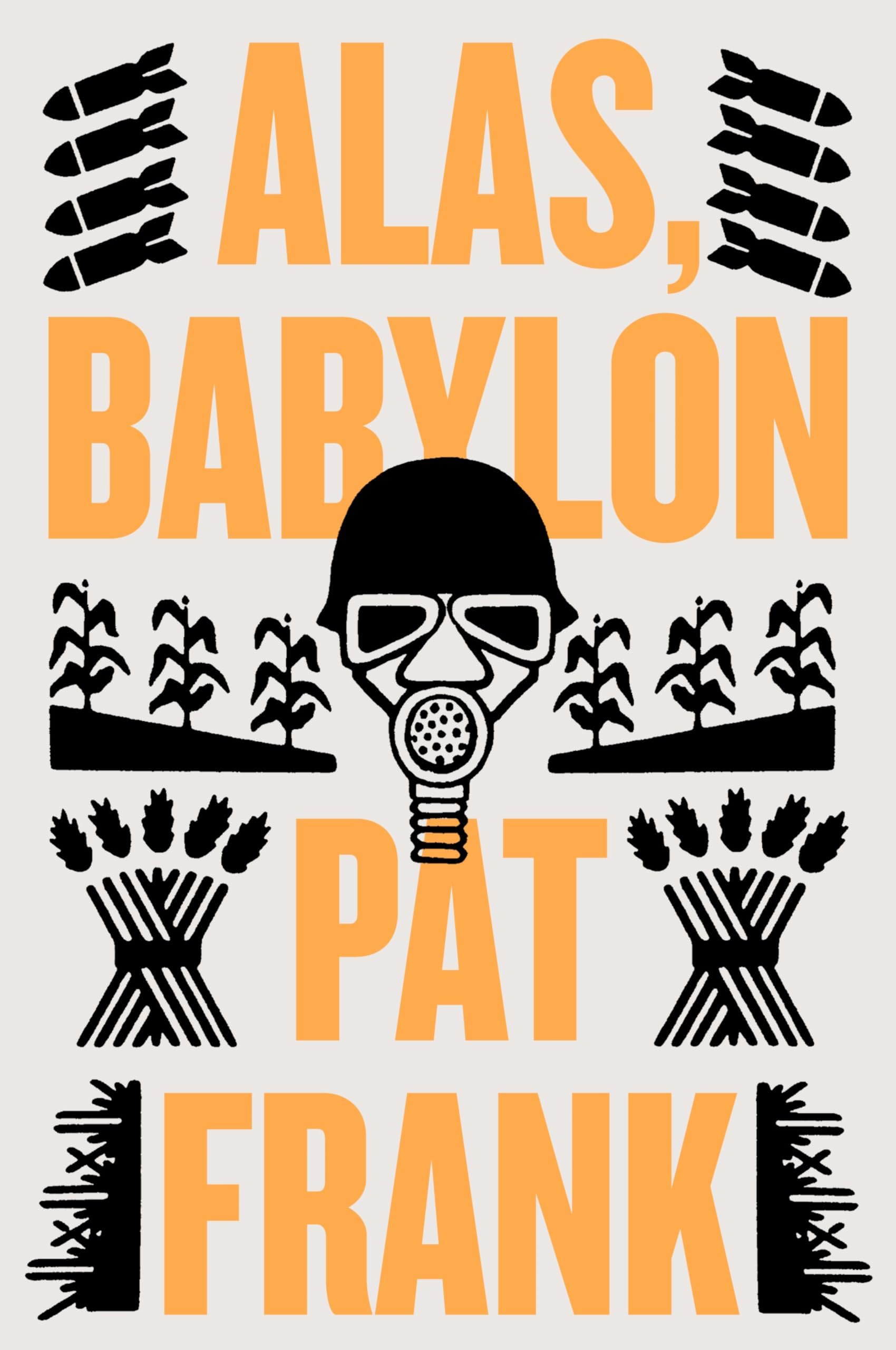
Alas, Babylon: The Classic Apocalyptic Novel of Courage, Survival, and Determination After Nuclear Holocaust
Product ID: 219775
Buy anything from 5,000+ international stores. One checkout price. No surprise fees. Join 2M+ shoppers on Desertcart.
Desertcart purchases this item on your behalf and handles shipping, customs, and support to Macau.
“An extraordinary real picture of human beings numbed by catastrophe but still driven by the unconquerable determination of living creatures to keep on being alive.” — The New Yorker The classic apocalyptic novel by Pat Frank, first published in 1959 at the height of the Cold War, with an introduction by award-winning science fiction writer and scientist David Brin. “Alas, Babylon.” Those fateful words heralded the end. When the unthinkable nightmare of nuclear holocaust ravaged the United States, it was instant death for tens of millions of people; for survivors, it was a nightmare of hunger, sickness, and brutality. Overnight, a thousand years of civilization were stripped away. But for one small Florida town, miraculously spared against all the odds, the struggle was only just beginning, as the isolated survivors—men and women of all ages and races—found the courage to come together and confront the harrowing darkness. Review: A bit dated, but still relevant and impactful - Having been published back in 1959, i.e. when the space program and commercial jetliner travel were still in their infancy, and whilst we were still in the Industrial Age and therefore less technology-dependent as we are now, not to mention less vulnerable to the electromagnetic pulse (EMP) effects of nuclear weapons as our present-day society would be, this novel is obviously a tad bit dated compared to more recent post-nuclear and other post-apocalyptic fiction books. Nonetheless, it's still an excellent book, eminently readable and engrossing, and frighteningly realistic, well worth the read. RANDOM STREAM OF CONSCIOUSNESS NOTES AND OBSERVATIONS (and noteworthy passages): --p. 3: "The Russians had sent up another Sputnik, No. 23, and something sinister was going on in the Middle East. Sputnik No. 23 was the largest yet, according to the Smithsonian Institution, and was radioing continuous and elaborate coded signals. 'There is reason to believe,' Frank said, 'that Sputniks of this size are equipped to observe the terrain of the earth below.....'There is a new crisis in the Middle East. A report from Beirut, via Cairo, says that Syrian tanks of the most modern Russian design have crossed the Jordanian frontier. This is undoubtedly a threat to Israel. At the same time Damascus charges that Turkish troops are mobilizing….'" Wow, dated yet paradoxically so prescient in many ways. --p. 9: "Randy knew he wasn’t an alcoholic because an alcoholic craved liquor. He never craved it. He just drank for pleasure and the most pleasurable of all drinks was the first one on a crisp winter morning." Like the joke says, "I'm not an alcoholic, I'm a drunk, I don't go to meetings!" --p. 17: "'Nations are like people. When they grow old and rich and fat they get conservative. They exhaust their energy trying to keep things the way they are—and that’s against nature. Oh, the services were to blame too. Maybe even SAC. We designed the most beautiful bombers in the world, and built them by the thousands. We improved and modified them each year, like new model cars. We couldn’t bear the thought that jet bombers themselves might be out of style. Right now we’re in the position of the Federal Navy, with its wooden steam frigates, up against the Confederate iron-clad. It is a state of mind that money alone won’t cure.'” --p. 29: "B-47’ s," aahh, the pre-52 days of SAC. --p. 35: "'Then in ‘fifty-eight, after the Iraq king was assassinated, we grabbed the initiative and landed Marines in Lebanon. We got there fastest.'" --p. 37: Ah yes, the infamous "missile gap." --p. 55: Since the U.S. was still on the gold standard when this book was written, paper cash could hypothetically still be worth something even during a catastrophe such as nuclear war, I suppose. Review: Alas, Babylon still powerful more than 50 years later - I read Alas, Babylon when I was a teenager in 1960 at the height of the Cold War. It was powerful then when we were daily being presented with news of atomic testing, ICBMs, sabre rattling and practicing "duck and cover" in our classrooms. It was a scary time. This book, and the teleplay of the book, were spot on in depicting the terror of the times. After reading this the first time I tried to convince my parents - unsuccessfully - to build a bomb shelter in our back yard. Reading the book again for the first time in over 50 years brings back my memories of that time quite clearly. It is hard for people who did not live through that time to understand it, but this book does a good job of that. The book takes place in a small town in central Florida which just happens to be one of the few relatively safe locations in that state. It was far enough away from the many military bases and large population centers to miss being directly affected by the bombs and relatively unaffected by the fallout. The characters in this book are all interesting products of their times and their actions reflect that. Randy's panic when he fully understands what is about to happen is all too real. His confrontation with the town banker at closing time foreshadows the dividing line between before and after "The Day" as it comes to be known later. The book, published in 1959, also reflects the times with respect to race and segregation. It was interestingly advanced in the attitudes of some of its characters towards the "blacks" at that time, yet still portrays many of the ingrained, unrealized, unthinking attitudes of both blacks and whites towards each other that were then prevalent. The daily struggles for survival in a post-atomic war world are transformed by a staggering reduction of technology from free and easy power and the handy gadgets that makes possible (even before the always connected technology of today) to, for a while, a telegraph line and a single ham radio. The town doctor has a few instruments and drugs but no more are available as nothing can get to the town through the "restricted zone." Life becomes hard very fast and what once were trivial injuries and illnesses are now life-threatening. This book is a good read and still as riveting as it was the first time I read it. It will always be one of my favorites.


| Best Sellers Rank | #18,500 in Books ( See Top 100 in Books ) #177 in Post-Apocalyptic Science Fiction (Books) #445 in Classic Literature & Fiction #1,122 in Literary Fiction (Books) |
| Customer Reviews | 4.6 out of 5 stars 6,779 Reviews |
C**R
A bit dated, but still relevant and impactful
Having been published back in 1959, i.e. when the space program and commercial jetliner travel were still in their infancy, and whilst we were still in the Industrial Age and therefore less technology-dependent as we are now, not to mention less vulnerable to the electromagnetic pulse (EMP) effects of nuclear weapons as our present-day society would be, this novel is obviously a tad bit dated compared to more recent post-nuclear and other post-apocalyptic fiction books. Nonetheless, it's still an excellent book, eminently readable and engrossing, and frighteningly realistic, well worth the read. RANDOM STREAM OF CONSCIOUSNESS NOTES AND OBSERVATIONS (and noteworthy passages): --p. 3: "The Russians had sent up another Sputnik, No. 23, and something sinister was going on in the Middle East. Sputnik No. 23 was the largest yet, according to the Smithsonian Institution, and was radioing continuous and elaborate coded signals. 'There is reason to believe,' Frank said, 'that Sputniks of this size are equipped to observe the terrain of the earth below.....'There is a new crisis in the Middle East. A report from Beirut, via Cairo, says that Syrian tanks of the most modern Russian design have crossed the Jordanian frontier. This is undoubtedly a threat to Israel. At the same time Damascus charges that Turkish troops are mobilizing….'" Wow, dated yet paradoxically so prescient in many ways. --p. 9: "Randy knew he wasn’t an alcoholic because an alcoholic craved liquor. He never craved it. He just drank for pleasure and the most pleasurable of all drinks was the first one on a crisp winter morning." Like the joke says, "I'm not an alcoholic, I'm a drunk, I don't go to meetings!" --p. 17: "'Nations are like people. When they grow old and rich and fat they get conservative. They exhaust their energy trying to keep things the way they are—and that’s against nature. Oh, the services were to blame too. Maybe even SAC. We designed the most beautiful bombers in the world, and built them by the thousands. We improved and modified them each year, like new model cars. We couldn’t bear the thought that jet bombers themselves might be out of style. Right now we’re in the position of the Federal Navy, with its wooden steam frigates, up against the Confederate iron-clad. It is a state of mind that money alone won’t cure.'” --p. 29: "B-47’ s," aahh, the pre-52 days of SAC. --p. 35: "'Then in ‘fifty-eight, after the Iraq king was assassinated, we grabbed the initiative and landed Marines in Lebanon. We got there fastest.'" --p. 37: Ah yes, the infamous "missile gap." --p. 55: Since the U.S. was still on the gold standard when this book was written, paper cash could hypothetically still be worth something even during a catastrophe such as nuclear war, I suppose.
L**6
Alas, Babylon still powerful more than 50 years later
I read Alas, Babylon when I was a teenager in 1960 at the height of the Cold War. It was powerful then when we were daily being presented with news of atomic testing, ICBMs, sabre rattling and practicing "duck and cover" in our classrooms. It was a scary time. This book, and the teleplay of the book, were spot on in depicting the terror of the times. After reading this the first time I tried to convince my parents - unsuccessfully - to build a bomb shelter in our back yard. Reading the book again for the first time in over 50 years brings back my memories of that time quite clearly. It is hard for people who did not live through that time to understand it, but this book does a good job of that. The book takes place in a small town in central Florida which just happens to be one of the few relatively safe locations in that state. It was far enough away from the many military bases and large population centers to miss being directly affected by the bombs and relatively unaffected by the fallout. The characters in this book are all interesting products of their times and their actions reflect that. Randy's panic when he fully understands what is about to happen is all too real. His confrontation with the town banker at closing time foreshadows the dividing line between before and after "The Day" as it comes to be known later. The book, published in 1959, also reflects the times with respect to race and segregation. It was interestingly advanced in the attitudes of some of its characters towards the "blacks" at that time, yet still portrays many of the ingrained, unrealized, unthinking attitudes of both blacks and whites towards each other that were then prevalent. The daily struggles for survival in a post-atomic war world are transformed by a staggering reduction of technology from free and easy power and the handy gadgets that makes possible (even before the always connected technology of today) to, for a while, a telegraph line and a single ham radio. The town doctor has a few instruments and drugs but no more are available as nothing can get to the town through the "restricted zone." Life becomes hard very fast and what once were trivial injuries and illnesses are now life-threatening. This book is a good read and still as riveting as it was the first time I read it. It will always be one of my favorites.
F**R
Good book and story
Good book, moderate interest in the topic helps, it's a regular guy that gets a tip from a trusted source and from then on confronts the expected problems..read in two days as it was an easy flowing story , for some beginner prepper type, maybe a good way to get your mind working ...read a few books/watch some prepping movies, and just think about all the things you wouldn't have done ..lol...
J**N
As pertinent today as when it was written
I have wanted to read "Alas Babylon" for over a year now, and I actually ordered it from Amazon several months ago. For one reason or another, though, it always seemed to get pushed behind another book. Normally, when I enjoy a novel as much as I enjoyed this one, it would annoy me that I put off reading it for so long. However, in light of September 11th, I'm glad that I did, for two reasons. The first is that this novel reminds us of mankind's near infinite capacity for self-destruction, or at least creating the mechanism for it. Osama bin Laden and his fellow psychopaths could only dream of the systematic cruelty the Soviet Union perpetrated on its own citizens, let alone the tightrope nuclear balance of terror that the superpowers walked. However, they are cut from the same cloth, and it is lunacy to try to co-exist with them. Moreover, the rationalization of the irrational, the attempt to explain the unexplainable (for instance how both the US and the USSR created strategies to "win" a nuclear war) can only lead to heartache. Secondly, and most important, "Alas Babylon" reminds us of the indomitable spirit of man. Even as his characters struggle to grasp some normalcy from incomprehensible nuclear destruction, they cling to that which makes them human: hope, love and faith. While some may find it odd to be reading apocalyptic fiction in this time of war, I found this novel to be uplifting, an affirmation really, of the good we have seen around the world in the face of evil. I realize I am going about this backwards, but for those of you not familiar with the plot, it runs as follows. It is sometime in the mid-1960's (a rough guess) and the nuclear balance of terror has broken down. The country is in ruins, the state of the world is unclear, and communities are left to fend for themselves. The readers follows the lives of one small community in Florida for the first year following "The Day" as they struggle to survive and maintain the rule of law. Frank masterfully captures the full scope of the struggle, from almost prophetic descriptions of weapons, tactics and strategy (the novel was published in 1958) to searing characterizations of people in crisis. "Alas Babylon" operates on so many levels, it has something for everyone. One could easily sit down and read it as an adventure/techno-thriller and come away completely satisfied. It is also a rather scathing critique of war and the bureaucratization of the military. It is not as simple as "war is bad" though, Frank argues through one of characters (a retired admiral) that while war, particularly nuclear war is insane, the price of peace is rational preparedness enacted by professionals, combined with a dialogue that humanizes the enemy. Above all, though, "Alas Babylon" is a testimony to the ingenuity and compassion of man. Yes, we have made mistakes, yes there is evil among us, but the majority of human beings are basically good when given the chance, and that, in these times as much as in the Cold War, is what we must never lose sight of.
A**R
A blast from the past
In a day when many think apocalypse means "zombies", this is a still-relevant book from the 1950's about a time when apocalypse fears were largely driven by the cold war and nuclear weapons. I enjoyed this book and found it both educational and entertaining. It indeed reads like a 50's science fiction novel and reflects the attitudes and ideas of the time. Some may be put off by the references to racial discrimination, but even in 1959 when the book was published, you can sense the author's attempts to push the idea that people should be judged by character and not color. Character, in fact is a constant concept in the book. There are some like the book's protagonist, Randy Bragg, who are stalwart but still flawed. There are others who seem of weaker character like his neighbor Florence, who surprisingly flourish in the crucible of the apocalypse, and sadly there are people of questionable character that will always choose selfishness and violence over reason and cooperation. General audiences in contemporary times may look to fantasies like The Walking Dead as their literature of choice for apocalyptic fiction, but even then there is some common ground between the two. They both have their bogeymen of zombies or radioactive fallout, but for both the ultimate threat to humanity is humanity. Still, Alas Babylon is a well written story, even with the few typos in the printed version (and apparently many more in the ebook edition!). There are a couple spots I found confusing; Frank's writing is normally very good but there is a combat scene that is somewhat confusingly described, and a couple areas where characters would be expected to be more emotional and are not. Perhaps those moments, like the presence of some racial and gender tensions in the book, are products of the social standards of the time. Even the ending, which offers some hope, can be criticized for being too pat. But flawed gems can still have value, and this one is less flawed than most.
G**S
a classic of the Post-Apocalypse subgenre
I had HEARD of this book long before I read it. I've finally gotten around to buying it and reading it, and I'm glad I did. This book is an absolute must-read for fans of post-apocalyptic fiction. It was first published in 1959, so it is dated in some ways now, but it is still well worth reading. It asks the age-old questions: "What if the world (as I know it) comes to an end, but I'm still alive? How can I stay alive? Can I help my fellow survivors stay alive?" The central character faces all these questions, along with a half dozen or so secondary characters, and they come up with some very good answers. One way the book is outdated is that it's based on a major nuclear war with the Soviet Union. The Soviet Union is long gone, and the threat of nuclear annihilation weighs on our minds much less now than it did in 1959, but this anachronism doesn't derail the story for a modern reader. Substitute any other cause of apocalypse and the problems remain largely the same: How can we survive without the industrial civilization we grew up with? Besides, nuclear weapons DO still exist. Another way the book is outdated for American readers in 2016 is in its depiction of race relationships. Segregation was still a fact of life in Florida in 1959, and that facet of the story can be jarring to us now. That said, I agree with another review I saw here (on Amazon) that points out that the black ("Negro") characters are mostly treated with dignity and are portrayed respectfully. You could say that those were racist times, but neither the author nor the main character are racist individuals. Read this book, and think...
K**R
Fix it
This was a wonderful book. I saw it on TV, black and white TV, when I was about 12. I tried to check it out of the library but was told my mother would have to check it out because I was not old enough to read a book like that. Sadly, I had ridden my bike to the library. A few weeks later I saw a copy in a drug store. It was in the single four-sided rotating bookrack next to the magazines. The counter guy had no compunction about selling it to me. This book enthralled me. I read it several times over the years. The last time I moved my residence the book was without a front or back cover, it was brown, brittle with the center 50 pages loose and the whole book was held together with a rubber band. I threw it away and I have missed it since. A few days ago I found it as an e-book and I bought it. I have loved and hated re-reading the book. It holds up very well and the situation in the Middle East is almost spot on the same today. The story is as fresh as the first time I read it. But there is one thing that is appalling and unacceptable. The spelling and syntax is far below even the lowest standards of publishing. Spell check is not an editor! On page after page I have had to stop and figure out from context what is being said. It stops the flow of ideas and the movement of the story line. HarperCollins published this book but it is a sad, ignorant, demoralizing shadow of the original story. I almost feel that something that I remembered as beautiful, even elegant, is now found as a tired, dissipated and debauched whore hustling for a couple of dollars in back alleys and doorways. This edition of Alas Babylon also demeans your company. There was a time when publishing houses were held up as lustrous paragons of and protectors of the language. You made our literary heritage accessible to our culture. You had standards. Is the luster completely gone? Has all pride in the product you offer been subsumed in a frenzy for dollars at any cost? One of your authors has a great and I believe a pertinent quote. She said, "Reputation is what other people know about you. Honor is what you know about yourself". If you know this is happening, then it is too late and your reputation will not be maintained for long. If you were not aware it is time to fix it!
R**O
What's the last book you read that you couldn't put down?
What's the last book you read that you couldn't put down? Can't remember? Well, I got one for you! It's a 1959 novel that is more than just a story of the consequences and outcome of a nuclear war between America and Russia. This novel gives the reader the flavor of what America was really about in the 1950's. I remember the air-raid drills in grade school when a student was instructed to dive under their desk in the event of a atomic/nuclear strike. Like that was going to save your butt! I remember President Eisenhower saying the same thing. Here was a man who saw the destructive power of Little Boy in Hiroshima and Fat Man in Nagasaki saying that the desk would save me. Oh, well. Since this novel was published just before the civil rights movement, the ugly head of racism exists in this novel. This is not a knock on the author, Pat Frank, because he was writing in accordance with the prevailing thoughts of 1959. This novel was probably born out the U.S.A.'s fear of being attacked from space after Russia successfully launched the Sputnik satellite into space in 1957. This act most likely sparked the arms race and subsequently launched nuclear war/post-apocalyptic novels like this one into popularity during the 1950's and 1960's. However, this novel gives the reader hope that a nuclear war is survivable, unlike novels such as Nevil Shute's 'On the Beach', where there is no hope for survival after World War III has polluted the atmosphere with world wide nuclear fallout. Alas, Babylon truly gives the reader a taste of that 1950's fear and the general attitude of the citizens. Well done, Pat Frank. The story centers around the town of Fort Repose in central Florida. Our protagonist, Randy Bragg, is contacted by his brother, Mark, a Colonel in the U.S. Air Force stationed at SAC headquarters in Omaha, Nebraska. Mark tells Randy that war is imminent, and he is sending his wife, Helen, and two children to live with him in Florida. The day after Helen lands, the unthinkable happens. The U.S. and Russia exchange nuclear missiles! At first the town had electricity; then, the families witnessed a stunning explosion: "The white flashed back into a red ball in the southeast. They all knew what it was. It was Orlando, or McCoy Base, or both. It was the power supply for Timucuan County. Thus the lights went out, and in that moment civilization in Fort Repose retreated a hundred years. So ended The Day." Several days later, the bombing stops. Randy houses most of the River Road people, including his brother's family, Randy's girlfriend Elizabeth and her family, and the local doctor, Dan Gunn. The Western Union lady, Florence, and the local librarian, Alice, live next door. The Preacher Henry family lives close by, as does the retired Admiral, Sam Hazzard. This constitutes the main core of characters (Those living in the vicinity of Randy's River Road abode) in this cutting-edge story. Luckily for the town, the winds keep the fallout away from them even though Florida is listed as one of the many contaminated zones. The retired Admiral finds out via his short-wave radio that the Secretary of Health, Education, and Welfare is now Acting Chief Executive. Randy knew that: "...The struggle was not against a human enemy, or for victory. The struggle, for those who survived "The Day", was to survive the next." The ensuing chapters deal with the River Road people's efforts to obtain food; avoid typhoid; establish law and order against the many `highwaymen' attacking their town; and to establish ways and means for mankind's survival. I thought that Pat Frank's characterization was as good as it could be based on the many characters in the book. Near the end of the book, Lt. Colonel Paul Hart says to Randy Bragg: "'Some of our scientists think it will take a thousand years to restore a saturated [Contaminated Zone], like Florida or New Jersey, to anything close to normal.'... and Randy turned away to face the thousand-year night." By the way, the story does end with the reader finding out who won the war! I guess you will have to read this sci-fi classic to find out.
A**O
Da leggere tutto in un fiato
Fantastico a chi ama il genere fantascienza... Pat Frank un mito nel genere.
L**A
Postapocalyptic classic
One of the best postapocalyptic novels - a classic!
B**N
After a Nuclear Apocalpse
An excellent, well-written story with extremely credible characters. Considering that it was written almost 70 years ago and a decade before the Civil Rights Act, it is very advanced in its social thinking. It is also sobering in the way it brings home the leaps that we have made technologically since 1959. I especially chuckled at the thought of power only coming from hydroelectricity or oil.
J**N
65 years and counting
Look, this book is a classic. It's extremely well-written, both in literary and technical terms. I am of the generation that feared nuclear war from childhood, and now I'm getting old. What I'm trying to say is.. we made it a long time now since mankind first stared down the barrel of nuclear apocalypse. Maybe there is a god.
D**K
"Alas, alas, that great city Babylon, that mighty city! For in one hour is thy judgment come" If you hear this, be VERY afraid
I liked this old classic about nuclear war and its aftermath. Written in 1959 it aged a little, but still is a GREAT read. Below, more of my impressions, with some limited SPOILERS. Randy Bragg lives in the small Central Florida town of Fort Repose. He is not a very successful guy, in fact he is mostly content with eating his inheritance... One day however his much more formidable brother, Colonel Mark Bragg, USAF, sends him a telegraph ending in the words, "Alas, Babylon", a pre-established code between the brothers warning of impending disaster. It appears quickly, that this disaster is a HUGE one... This was one of the very first novels to describe the occurence and the consequences of an all-out nuclear war. The much darker and much more pesimist "On the beach" was published two years earlier and the equally dark and pesimistic "Canticle for Leibowitz" was published in 1960. "Alas Babylone", a much more realistic thing than those other two classics, made quite a splash when it was published. Unlike so many others, the author, whose real name was Harry Hart Frank, knew what he was writing about. He served in military during WWII and watched Korean War as journalist, he studied a lot about the nuclear weapons and it shows in this book. The novel deals less with the nuclear war itself, than with what happens next. There are, quite obviously, survivors, in fact quite a lot of them, but the organised society as we know it initially collapses - the description of this process is quite fascinating. Then, as always, people regroup and re-organise themselves, facing challenges and solving problems. This is an uphill battle, but life always ultimately triumphs over death... Author very wisely states in this book, that it is not the strength of American nuclear arsenal that is the problem - it is the weakness of USA that causes Soviet union to attack, as Moscow believes it can win a nuclear war. It is a very important point showed in this book: in some circumstances a nuclear war CAN be won - it becomes only imposible if BOTH sides have enough primary and back-up fire power to always fully incinerate the enemy, no matter how total the initial surprise and how big the first-strike damage. On another hand, one thing totally absent here is the "nuclear winter", and a mighty good thing too, as it is a total nonsense... This book can be also read as a kinf of post-apocalyptic SF, albeit slightly more optimistic than most of such works. Left-winged people and peaceniks will almost certainly hate this book - which is another point in its favour... I don't want to provide spoilers here so I will keep this review short. This is an important book, still a good read and a thing that makes one think, in fact think a lot. I am glad that I bought and read it. ENJOY!
Trustpilot
3 days ago
1 month ago