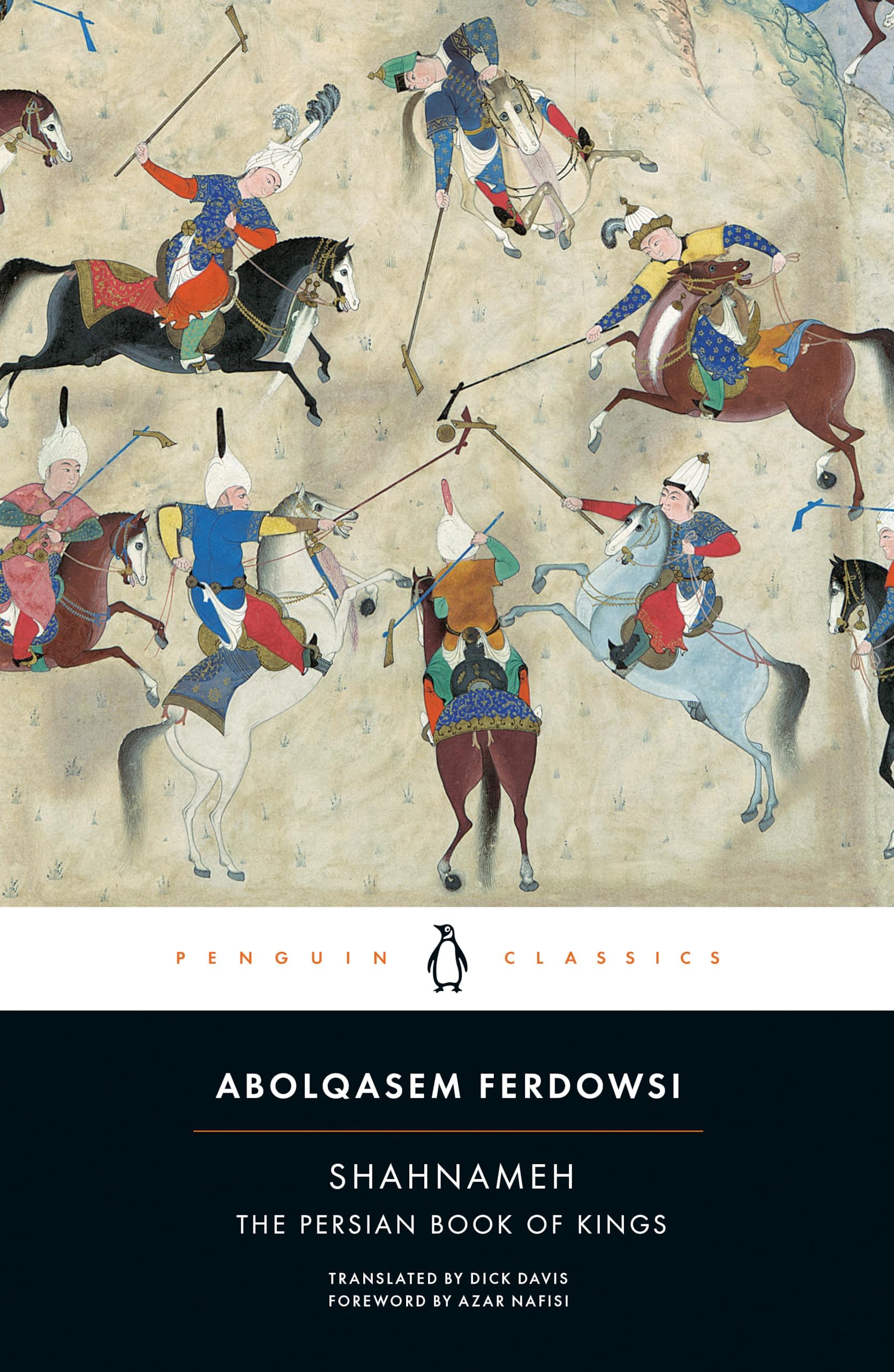

Shahnameh: The Persian Book of Kings
Product ID: 268677616
🏆Penguin Classics prestige
📈Top 25 in Middle Eastern & Epic Poetry
📜100+ pages new translation
Buy anything from 5,000+ international stores. One checkout price. No surprise fees. Join 2M+ shoppers on Desertcart.
Desertcart purchases this item on your behalf and handles shipping, customs, and support to Macau.
📚 Unlock the timeless saga of Persia’s kings—where history meets legend in every page!
Shahnameh: The Persian Book of Kings, translated and expanded by Dick Davis, is a Penguin Classics edition that offers over 100 pages of new text. This masterful prose-verse translation narrates the epic story of pre-Islamic Iran, blending myth, history, and philosophy. Highly ranked in Middle Eastern and Epic Poetry categories, it’s a must-have for history buffs and literary connoisseurs seeking to connect with one of the world’s greatest literary treasures.




















| Best Sellers Rank | #20,428 in Books ( See Top 100 in Books ) #18 in Middle Eastern Poetry #23 in Epic Poetry #56 in European Poetry |
| Customer Reviews | 4.6 out of 5 stars 467 Reviews |
R**A
A evolução da civilização Pérsia, originalmente em poemas e ilustrado através de pinturas
Os historiadores e os amantes de História devem ler o magnífico livro Shahnameh (0 Persa Livro dos Reis), escrito pelo poeta persa Abolqasem FERDOWSI.
C**N
An Absolute Delight
Davis says in his excellent introduction (but don’t try to read it before reading the text unless you are already an aficionado of Persian history and literature) that he is writing for the general reader. Well that’s me and he has done a cracking job. At first his gentle, rhythmical apparently simplistic style can seem naïve, until as the centuries of years and pages pass you start to get the wisdom of the philosophy of the text which somehow goes with the beguiling rhythms of the speech, somewhat like a long fairy tale spoken out loud from a rocking chair. I felt I had learned a huge amount of the spirit, the culture and the wisdom of ancient Persia. This ancient poem (mostly translated into poetical prose) tells the story of Persia from more than a thousand years BC up until the triumph of Islam, and indeed commences with a creation myth. It was written perhaps based on written and oral records about 1000 years ago at a time when there was a particular interest in pre-Islamic culture. The author Ferdowsi speaks with a voice representing the religion of the time – pre-Zoroastrian or Zoroastrian. For reasons that Davis is unable to entirely explain it misses out the great Persian Emperors any student of ancient history is familiar with, like Cyrus, Xerxes etc – Davis thinks the author Ferdowsi was spellbound by the history of Eastern Persia/Western Afghanistan which especially the earlier part actually covers. It does include a fascinating account of Alexander (called Sekander), which account as Davis mentions divides the earlier accounts of fantastic heroes most notably Rostam and the later more modern and morally ambiguous more historical tales of the Sasanid kings. All these tales are however told with relish for the drama inherent in them. The Persian style appears to be one of delight in this world – the women, the wine, the countless jewels and wealth - but at the same time religious devotion and brief but profound meditations on morality descend on us typically at the end of every adventure. This book is a great delight, and anyone who likes a good tale and has an interest in Persian history is in for a treat.
A**E
Epic
I love shahnameh. This is the only affordable paperback version on Amazon.
L**T
Excelente libro
La épica persa, lectura amena con una buena traducción.
M**I
Great Read
As an avid reader of world literature, I recently delved into the pages of Shahnameh by Abolqasem Ferdowsi, and was absolutely captivated by the epic poem. From the very first lines, Ferdowsi's poetic language drew me into the mythical world of ancient Persia, where the gods created the universe and the first king rose to power. Throughout the poem, Ferdowsi's vivid descriptions and colorful characters brought the stories to life in a way that was both entertaining and educational. I was particularly struck by the tales of great heroes such as Rustam and Sohrab, whose bravery and sacrifice resonated with me on a deep level. Their stories, along with those of other kings and warriors, revealed a complex and nuanced view of Persian culture and history that I had never encountered before. But Shahnameh is not just a book about warriors and battles. The stories of love and loyalty, of treachery and betrayal, of human triumphs and tragedies, all wove together to create a tapestry of the human experience that transcends time and culture. Despite being written over a thousand years ago, the themes and values of the poem are still relevant today, and I found myself contemplating the lessons that could be gleaned from the pages. Overall, I would highly recommend Shahnameh to anyone interested in world literature or Persian culture. While the length and complexity of the poem may seem daunting at first, the beauty and richness of the language and the stories make it a rewarding and unforgettable read. Ferdowsi's masterful retelling of Persian history and mythology is a testament to the power of storytelling and the enduring appeal of human experience.
Trustpilot
2 months ago
1 month ago