Buy anything from 5,000+ international stores. One checkout price. No surprise fees. Join 2M+ shoppers on Desertcart.
Desertcart purchases this item on your behalf and handles shipping, customs, and support to Macau.
🔋 Power your freedom, anywhere, anytime.
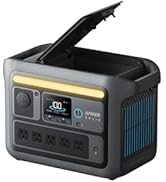
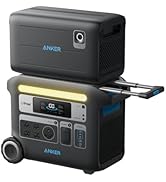
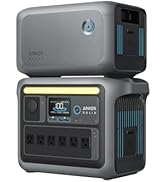
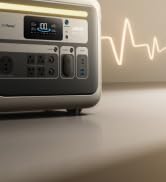
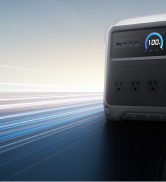
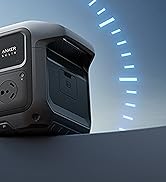
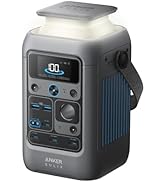
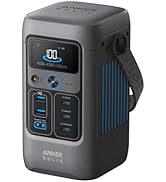
The Anker 521 Portable Power Station is a compact, 256Wh LiFePO4 battery-powered generator with 300W continuous (600W peak) output. Featuring 6 diverse ports including dual AC outlets and a 60W USB-C PD port, it supports fast charging and multi-device use. Designed for outdoor enthusiasts and professionals alike, it offers a decade-long battery lifespan, robust surge power, and a lightweight, portable form factor—perfect for camping, emergencies, or off-grid work.


| ASIN | B09FF46FQ9 |
| Antenna Location | Laptop |
| Battery Capacity | 80000 Milliamp Hours |
| Battery Cell Type | Lithium Ion |
| Battery Charge Time | 2.5 Hours |
| Battery Weight | 1860 Grams |
| Best Sellers Rank | #24,338 in Patio, Lawn & Garden ( See Top 100 in Patio, Lawn & Garden ) #80 in Outdoor Generators |
| Brand | Anker |
| Built-In Media | Anker 521 Portable Power Station (PowerHouse 256Wh), DC adapter, car charging cable, welcome guide, our worry-free 5-year warranty, and friendly customer service. |
| Color | Black |
| Compatible Devices | Laptop |
| Connector Type | USB Type C |
| Customer Reviews | 4.4 out of 5 stars 3,095 Reviews |
| EU Spare Part Availability Duration | 5 Years |
| Is Electric | No |
| Item Dimensions | 8.5 x 5.67 x 8.33 inches |
| Item Dimensions L x W x Thickness | 8.5"L x 8.32"W x 5.67"Th |
| Item Type Name | Anker 521 Portable Power Station, 256Wh Solar Generator (Solar Panel Optional) with LiFePO4 Battery Pack, 200W 6-Port PowerHouse, 2 AC Outlets, 60W USB-C PD Output, LED Light for Outdoor Camping, RV |
| Item Weight | 8.2 Pounds |
| Manufacturer | Anker |
| Mfr Part Number | A1720113 |
| Model Name | A1720 |
| Model Number | A1720 |
| Number of Batteries | 1 C batteries required. |
| Number of Items | 1 |
| Number of Outlets | 2 |
| Number of Ports | 8 |
| Other Special Features of the Product | Portable |
| Output Wattage | 300 Watts |
| Portable | Yes |
| Power Source | Battery Powered, Solar Powered |
| Reusability | Rechargeable |
| Smart Home Compatibility | Not Smart Home Compatible |
| Special Feature | Portable |
| UPC | 194644083953 |
| Voltage | 110 Volts (AC) |
| Warranty Description | 2 year manufacturer |
| Warranty Type | Limited |
-**-
Working well so far in limited testing
I bought this as an auxiliary power source for use in a vehicle--I need to carry a 12 volt refrigerator with me (special dietary needs, road food, etc.), and occasionally charge up Milwaukee tool or DSLR batteries even if the vehicle is not running. The packaging of the 521 is ideal, although I wish the two 120V outlets had "real" 3-prong outlets. The size is perfect when a vehicle is loaded up--it uses little space. I ran two tests with the refrigerator connected to the 12 volt outlet. The refrigerator operates in both ECO and MAX modes. The ECO mode draws 30-35 watts while operating, while the MAX runs at anywhere from 40-50 watts. I ran the refrigerator indoors somewhat near a heat outlet, to simulate being inside a warm vehicle. The refrigerator is rated to deliver 256Wh of power, so I calculated that worst case would be the refrigerator running constantly for 5.5 hours. Turns out that with the refrigerator cycling on and off, it ran over 20 hours before the battery was down to about 2-4% capacity. EDIT: I had a charging issue that was partly my own misunderstanding and partly my car's wiring. I was at first unsuccessful in getting the 521 to charge from both inputs. First, I had to use a USB-C PD charger, which provides higher voltages than standard USB chargers. This allowed a full 65 watts on the USB-C input for charging. But I would add the 120 volt charger that came with the 521 in tandem with the USB-C charger wasn't getting the ~120 watts of charging. I later realized that for battery health, the 120 watt charging through both DC inputs only happens when the battery's state of charge is lower. If it's nearly fully charged, it cuts back to only a single DC input. Yet, I still could not get both to work in the car. I have a 150 watt 120-volt inverter in the car, which plugs into a rear accessory outlet using a lighter plug. It turns out that if I have both the 521's 120 volt charger and a USB-C PD charger plugged into the inverter, the inverter stops working. Likewise, if I use a separate USB-C charger that plugs into the accessory outlet (I have a 1:3 adapter with a voltage readout), the inverter cuts out. It seems the inverter is cutting out when voltage drops below a nominal value like 12.8 volts. In essence, the wiring from the fuse box to the accessory outlet cannot provide full wattage without voltage sag. When I plug the USB-C PD adapter into an accessory outlet in the center console (which is on its own 15 amp circuit), I can get 120 watts of charging to the 521. I will wire up my own circuit with 6-gauge wire to run a 300 or 400 watt inverter and a pair of accessory outlets, as this will eliminate the voltage drop. With ~120 watts, this provides a quicker recovery for the battery while the refrigerator is operating, which is exactly what I needed.
M**D
Very cool little Power Station! (Anker 521 PowerHouse 256Wh)
I've unboxed and charged up my Anker 521 PowerHouse and it's pretty awesome. It's pretty light for what it is. Seems to be pretty sturdy as far as electronics go. I charged it up fully with the wall plug to 100% like it said to do. (likely to calibrate the battery management system so the battery % is accurate and the actual capacity is maximized) I powered a bunch of LED AC lights while charging my laptop, phone, a smaller anker powerbank, and some other devices plugged into the car power hole and it lasted for several hours. I feel like it actually lasted longer than I expected for not being a huge device. It will power LED lights for many hours. I bought some Ultra efficient 4 Watt Philips LED bulbs and it says it will power two lamps with those bulbs for over 16.2 hours at 90% State of Charge!! Great for power outages or for staying in off the grid Airbnbs which is what I bought this power station for. I saw another review that stated it draws power even when nothing is plugged in and after testing it I've found that isn't the case unless you have the AC outlet button turned on when you aren't using the AC outlets so it's a none issue. In case you are curious it said it was drawing 5W when there was nothing plugged in and the AC outlets were turned on but then when I plugged in two 4 Watt LED lamps it said it was putting out 10 Watts so it seems it's more efficient with a load but again you can use the other ports without having the AC outlets turned on and there's no extra draw. This is a none issue. It seems to charge up in the timeframe advertised with the wall plug charger but I haven't tried the dual plugs using that in combination with the USB-C plug on the front. If that doesn't work as advertised I'll update my review. I like the light on the front and handle on top but I do wish there was a carry case available for it. Maybe there is but it wasn't listed with it on the anker website so I'm assuming there isn't. The light on it is nice and the SOS feature is setup in a great way, I like that you just do a quick press to turn on and off the light and to activate the SOS mode you have to hold the button for 2 seconds so you don't have to cycle through either of those modes to get to the other. I would recommend this, it seems like it's pretty fool-proof and seems like it'll automatically shutoff if you try to charge it in damaging temperatures so it's pretty worry free as long as you don't store it with a low state of charge for long periods which can damage all Lithium based batteries.
J**K
A winner for powering my Airmini CPAP
I purchased this specifically to run an Airmini CPAP while camping, and I desired 2 nights of capacity. I don’t review many products, but because this one matched up with my camping CPAP needs perfectly, decided to write one. My testing at home, using the regular Airmini AC adapter (not the DC adapter for Airmini, I haven’t bought one of those yet) resulted in 66% of charge left after one 8 hour night of use. My CPAP pressure is between 8 and 9. I recently used the Anker 521 for two nights while camping, again with the standard AC Airmini adapter. I used the built in light for about 10 mins, but didn’t charge any phones or other devices. I only plugged in the AC adapter when I was going to use the Airmini, and unplugged it when I got up in the morning. The first night was 6hrs 45 min of Airmini CPAP use, the second night 9 hours 20 min. After both nights, the charge was 38%. The temp the first night was in the high 20s F, and the second night, low 30s F. So I didn’t experience any loss of capacity due to the lower temperatures than my at home testing. Right now I’m very pleased with the Anker box. Next trip I will use the built in light longer and probably charge my phone a few times. Things I really like about the Anker 521, and why I chose it for my Airmini power supply: Can turn on or off different sections of the power box, to save power when not using the other types of power (12v, USB, AC, etc) Has a trickle charge (regular) and eco mode (my terms, can’t remember the actual Anker terms) for power output modes. In regular, even if your device doesn’t draw much power, the Anker stays on. I wanted this, as many battery boxes would turn off after 3-4 hours because someone’s CPAP didn’t draw enough current, and the battery box then turned off. I wanted it on, when I told it to be on! LiFePo4 battery is supposedly safer than standard Li batteries. Built in light was plenty to see inside my tent. Weight and size I considered to be great given the power output. I believe the unit can be plugged into the wall and also powering devices, performing like an UPS. I don’t need this currently, so didn’t test it, so can’t say for sure. Cons: none yet! I’d love to try this with a solar panel, but don’t have one yet. Conclusion: I’d buy it again!
S**S
Great device, jacks are not so durable but great support
Great device - I like the size and a lot of things about this one. We have now been using it daily for 6 weeks and I can offer some feedback. It works well, I love that it has an MPPT charge controller and 60 watts is good enough to work with 100 watt panels. I like the 200 watt PSW inverter too. This really helps for camping. The promotional info said that Anker uses quality parts for this build but I have to say that the jacks, both the USB A out and the charging port in are not holding up. One of the USB A ports became intermittent after about 35 days and so we can only rely on one of them. Then the large charging socket on the back has lost it's grip on some of the plugs. They almost fall out. Poor spring? Some plugs stay in better so it may depend on the tolerances as well. Oh well, things happen and the price was great. With a 5 year warranty I have no regrets. UPDATE: I contacted Anker and they sent another one which is working 100%. Great company!
C**B
Perfect for drone/travel.
I bought this for frequent trips to the Everglades. It works amazing. You can get about 15 phone charges out of it. I can charge all three batteries on my dji air3s from dead to full once. It can run multiple things at once and shows your current output. Has a built in light that is easy to use. The outlet and car port must be turned on manually. I did try to overload the battery and it auto shut off. Battery can be charged in about an hour and seems to hold a full charge well (no leakage). You will hear the fan turn on but it’s not loud at all. I paid $130 on sell and I’m very happy with it Hand for size
I**D
The Little Box of Defiance: A Personal Power Grid in a World Gone Dark
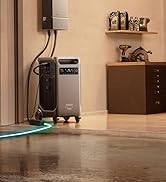
Dateline: A Silent House, 1:25 AM. The power is out. The grid, that fragile, humming web we all depend on, has finally given up the ghost. The neighborhood is plunged into a sudden, medieval darkness. The silence is deafening, broken only by the frantic, internal monologue of a man whose digital nervous system has just been severed. The phone is dying. The laptop is a useless brick. The world has shrunk to the size of a single, dark room. This is the moment of truth. The moment that separates the prepared from the pathetic. And in my corner, sits a quiet, unassuming grey and black box: the Anker 521 Portable Power Station. This is not a generator. A generator is a loud, stinking, gas-guzzling beast that screams your desperation to the entire county. No, this is something else entirely. This is a silent, solid-state brick of pure, unadulterated electric potential. At its heart is a LiFePO4 battery, a name that sounds like a mineral mined on a hostile moon. And it has the constitution to match. This isn't the fragile, temperamental battery chemistry of a cheap power bank. This is the hardened, long-haul stuff, built for a decade of abuse and a thousand cycles of life and death. It’s the kind of reliable core you want when the lights go out for real. You press the button, and the little screen glows to life, a calm, rational display of numbers in a world gone mad. It tells you how much juice you have left, a beautiful, concrete percentage of hope. And then you see the ports. It’s a beautiful, multi-pronged solution to the problem of a dead world. Two proper AC outlets, the kind you find in a wall, ready to accept a lamp or a laptop charger. A 60W USB-C port that funnels power into a dying MacBook with the ferocity of a firehose. A whole suite of USB-A ports for the lesser-but-still-vital gear. The phone gets plugged in. The smartwatch. The rechargeable lantern. The laptop. One by one, their tiny charging lights blink on, small constellations of defiance against the oppressive darkness. The house is still black, but my little corner of it is alive. I have a communications hub. I have light. I have a connection to the world outside my unlit window. I’ve dragged this box into the wilderness, a willing companion on camping trips where it kept the music playing and the cameras charged, a silent workhorse in the middle of nowhere. It has weathered every storm, both literal and figurative. The Anker 521 is more than a battery. It’s a plan. It's a small, portable declaration of independence from a fickle and unreliable power grid. It’s the quiet confidence of knowing that when everything else goes dark, you have a 256 watt-hour box of pure, life-giving electricity, waiting patiently to be unleashed. It’s not just a power station; it’s a peace of mind you can carry by a handle.
W**S
Buggy and doesn't live up to listed capacity, lasted under 200 charge cycles
Buggy and doesn't match expected capacity... Already owning a Jackery 240, I chose this for my second power supply of this size because of its LiFEPO batteries and nifty front facing light, with the understanding it would be a little bigger and heavier due to battery chemistry but also have an extra 16 watt hours of power and all the safety/endurability improvements of that battery chemistry. After all, LiFE batteries last for several times as many charge/discharge cycles as standard lithium ion (like in the Jackery 240) and are more heat tolerant before they enter into a runaway reaction (i.e. overheat and spontaneously combust). It's way too early to confirm that this battery system can manage the 3,000 cycles that Anker claims and most other manufacturers only claim 2,500 cycles for theirs, but I like the warm white front facing LED lamp and still hope the unit will last a long time. I also hope that it's as durable as they claim, as that was another selling point. This is where my positive impressions end, unfortunately. Another task for this unit was to replace the Jackery 160 that I'd kept by my desk with my internet router and PC monitor plugged into it, serving as a UPS (uninterruptable power supply) so that short blackouts wouldn't disrupt my working remotely from home. For one of these units to do this they must have "pass through" charging, meaning that they can simultaneously charge or keep their internal batteries topped up while also powering whatever's plugged into them. Some lesser/older models don't have this feature, so if you use them to power something and then plug them in to recharge themselves, they'll shut off the power to whatever's plugged into them. Pass through is great for having instant backup power and/or using them to power things during rolling blackouts, as they can charge themselves during the periods when the power is on without you having to intervene. This provides much better peace of mind when you're using the device to run something critical in a power outage rather than just out camping. My two Jackerys work great for this and so does a Bluetti I also own. But with the Anker, regardless of whether I set power saving or "eco mode" on or off, it would cut the inverter intermittently when left plugged in. It does this to things powered via USB as well only, because there's no on/off for the USB outputs, they resume receiving power after a moment's pause. I thought I'd received a bad unit and returned it for a new one but the replacement behaves identically. And speaking of plugging it in, compared to the other portable power stations I own, this one's transformer is on the plug itself, gets quite hot and uses a thinner gauge cable between itself and the unit. Cheap. FYI: The input barrel plug is the same size as the ones for the Bluetti EB70S and Jackery 160 and 240 units. Still on that topic, you can indeed charge the Anker via both its charger and a USB-C cable, simultaneously. Using my iPad charger I managed to push the 62 watts from the AC adapter up to 77 combined. A more powerful USB-C charger pushed this over 100 watts. But one of the advantages of the LiFE chemistry is that it can charge faster, so why the cheap power supply that outputs the same as the Jackery 240 with its inferior battery chemistry in the first place? The up side of this is that you can charge it via USB-C if you lose the AC adapter or use a solar panel with only USB outputs. Finally, the capacity. It's bigger and heavier than the Jackery 240 and boasts 256 watt hours of capacity to the Jackery's 240 wh. Yet with them both fully charged and then used to power window fans drawing 49 watts each, why was the Anker showing 61% battery remaining when the Jackery was reporting 72% left? I guess that doesn't necessarily mean that they're lying about the unit's capacity, but if they're not then the inverter is definitely significantly less efficient in the Anker -- And if that's the case, why does it read the same outgoing wattage? So to wrap up: Compared to a $30 less expensive Jackery 240 with older battery tech it's bigger and heavier and doesn't work properly as a UPS. It claims to have over 6% greater battery capacity yet actually revealed itself to be 15% its lesser. With LiFE cells rated at 2,500 full charge/discharge cycles before they drop to 80% capacity vs. standard lithium ion batteries only having 500, I suppose they'll be capacity equals in 500-700ish full cycles. Son, I am disappoint. UPDATE 2022.12.29: A new fun thing about this is that it also now shows 100% for around half of a discharge cycle, then increments down to a bit below 50%, then suddenly cuts power and reports a flashing 1% remaining. Charging with both inputs it prematurely disables the USB input and shows 99% for a large portion of the charge cycle while the AC charging brick flirts with 160 F temps. They really just don't seem to have implemented anything properly and at this point I regret the purchase and have dropped my rating to one star -- And that's having paid less than what it's going for now, now that the $50 coupon is no longer available. UPDATE 2025.04.05 Aaaaand...It's dead. I've probably cycled this 100 times over the last few years, and today it continually tells me it has 100% battery but then flashes 1% when I try to use the power. Plugging a USB C cable in to charge it, it refuses to accept the charge because it apparently thinks it's fully charged already. The reset button on the back didn't do anything to remedy the situation. The battery cells may support 3,000 cycles, but the electronics sure don't. Fortunately, I still have the Bluetti power station that I mentioned in my first review. It's seen more usage than the Anker and works flawlessly to this day.
D**R
AWESOME!!!
Anker has done it again by putting another great product out there!! I finally did the test I was waiting for 😁 This baby charges pretty quick no matter what percentage its on......mine was at 16% & it only took 1.5 hrs to charge back to 100%, that was car charging, awesome!! Performance is flawless 👍 I've charged my phone numerous times, my tablet, even my portable solar chargers (2) & my usb portable fans, this box lasted 4 whole days on 1 charge 😁 Portability is great & lightweight, looks heavy but it's not! It's a great little box that gives you plenty of uses which has 2 usb ports, 1 c port, has 2 outlet plugs, 1 car socket which works very fast!! I got it for $200, very good value for the money. You can take this box anywhere you need charging, has eco mode, very bright light.....Overall I'm extremely happy w/this charger, money well spent 😁 THANK YOU ANKER for another great product you've made, I have several of your products & I ❤️ them all....Job well done on this box!!! I HIGHLY recommend especially to the campers & hikers, it won't disappoint you!!!
V**S
Reliable, High-Capacity Power on the Go!
I recently purchased the Anker Portable Power Station, and I am thoroughly impressed with its performance. As someone who frequently camps and goes on outdoor adventures, having a reliable power source is crucial. This power station has exceeded my expectations in every way. Key Features: High Capacity: With a 256Wh capacity, this power station can charge my phone multiple times, power my laptop, and even run small appliances like a mini fridge for several hours. It's perfect for extended trips off the grid. Multiple Outputs: The variety of charging options (AC outlet, USB-A, USB-C, and DC car port) is fantastic. I can charge everything from my smartphone to my drone to my laptop without any issues. Compact & Portable: The design is sleek and portable, and at just under 7 lbs, it's easy to carry in a backpack or store in my car. It’s also surprisingly quiet when in use—no loud fan noise like some other power stations I’ve used. Fast Charging: I was amazed at how quickly this power station charges both itself and devices. It’s perfect for quickly topping off my devices between outings or after a long day. Solid Build Quality: The Anker brand has a reputation for quality, and this power station definitely lives up to it. It feels sturdy and well-made, with a durable outer shell that gives me confidence it’ll hold up over time. Cons: The price is a bit higher compared to some other options on the market, but in my opinion, it’s worth it for the reliability, efficiency, and convenience it offers. It could benefit from a higher power output if you plan to use larger appliances, but for most everyday electronics, it does the job perfectly. Overall, I highly recommend the Anker Portable Power Station to anyone looking for a dependable and efficient power solution while on the go. Whether you're heading out for a camping trip, road trip, or just need a backup power source for emergencies, this power station has you covered!

K**E
Better than power banks
I bring this with me when doing craft shows and camping and it’s way better than carrying around a bunch of power banks. Recharged multiple devices multiple times and still had juice left over. Only thing it hasn’t been able to power was a small home printer.
O**R
Versatile and works great!
I found this works excellent and as advertised. I purchased this shortly after a power outage caused by an ice storm here in Ontario Canada and have given it a full test on how well it charges, works for charging and powering other devices finding it does what I need for the most part. Great item for camping or keeping things like cell phones and laptops running as well as providing a light during emergencies at home or while away.

R**J
Practical item
The power station work well, I have plugged in an extension cord with other devices and it held up pretty good. The one thing that I’m happy about is that if I lose power it will give me temporary power for a while. As well that fact that it also has a Solar generator, another option to electricity when in need of it.
L**S
Très bon produit
J'ai commandé ce produit dans le but de gonfler mon paddleboard soit par prise classique soit avec une prise 12 volts et ça fonctionne très bien. De plus la lumière est très pratique le soir. Je m'en suis servi depuis à d'autres occasions et c'est vraiment parfait et le transport est très facile.
Trustpilot
4 days ago
5 days ago