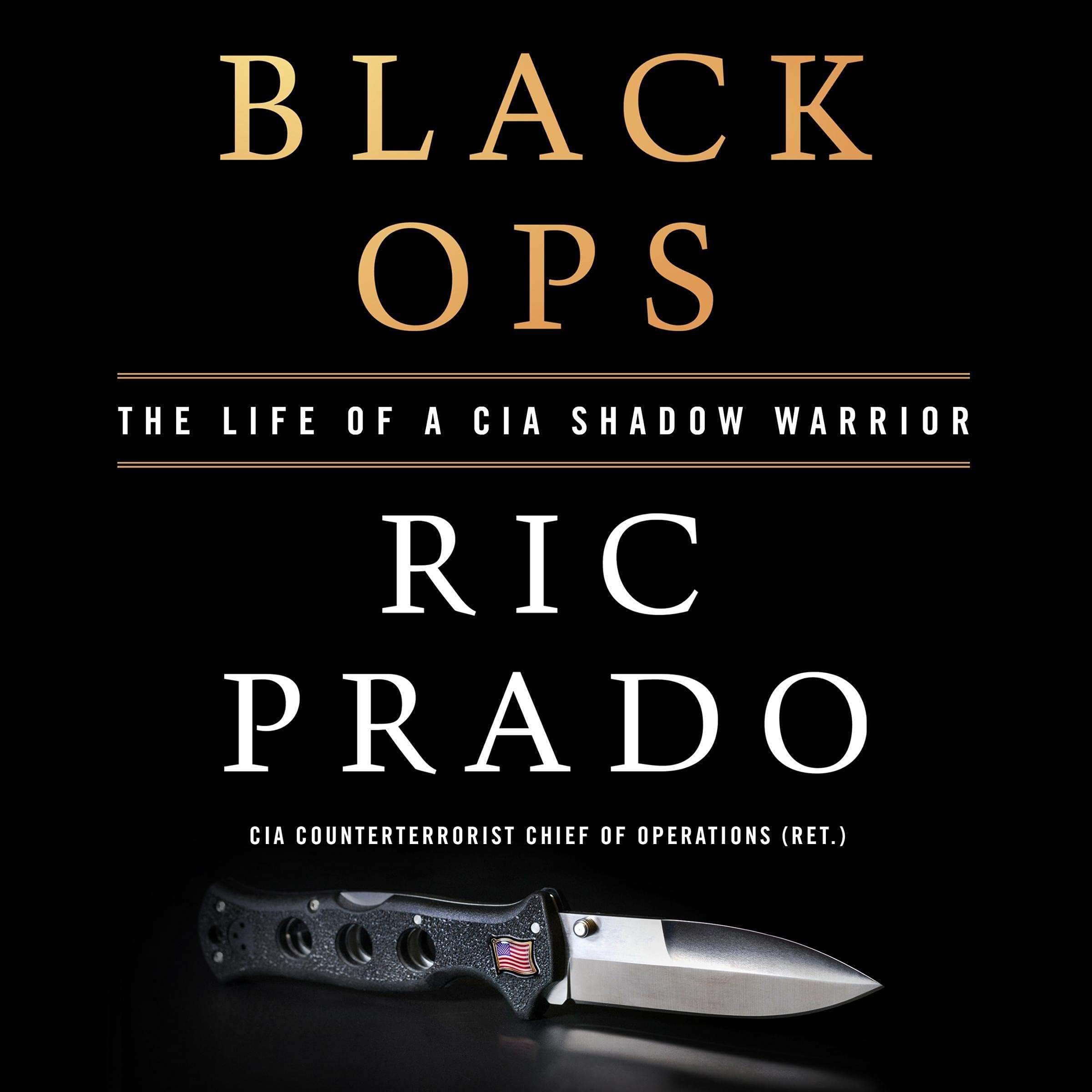
Black Ops: The Life of a CIA Shadow Warrior
Product ID: 424181428
Desertcart purchases this item on your behalf and handles shipping, customs, and support to Macau.
A memoir by the highest-ranking covert warrior to lift the veil of secrecy and offer a glimpse into the shadow wars that America has fought since the Vietnam Era. Enrique Prado found himself in his first firefight at age seven. The son of a middle-class Cuban family caught in the midst of the Castro Revolution, his family fled their war-torn home for the hope of a better life in America. Fifty years later, the Cuban refugee retired from the Central Intelligence Agency as the CIA equivalent of a two-star general. Black Ops is the story of Ric’s legendary career that spanned two eras, the Cold War and the Age of Terrorism. Operating in the shadows, Ric and his fellow CIA officers fought a little-seen and virtually unknown war to keep USA safe from those who would do it harm. After duty stations in Central, South America, and the Philippines, Black Ops follows Ric into the highest echelons of the CIA’s headquarters at Langley, Virginia. In late 1995, he became Deputy Chief of Station and co-founding member of the Bin Laden Task Force. Three years later, after serving as head of Korean Operations, Ric took on one of the most dangerous missions of his career: re-establish a once-abandoned CIA station inside a hostile nation long since considered a front line of the fight against Islamic terrorism. He and his team carried out covert operations and developed assets that proved pivotal in the coming War on Terror. A harrowing memoir of life in the shadowy world of assassins, terrorists, spies and revolutionaries, Black Ops is a testament to the courage, creativity and dedication of the Agency’s Special Activities Group and its elite shadow warriors. A Macmillan Audio production from St. Martin's Press Review: DO NOT PASS THIS UP - It is rare I write a review on a book purchase from desertcart. If you run across this book DO NOT pass it up. It's a great read, with insight to the CIA and how these men and women devot themselves to assure our safety and virtues. Thank you Enrique for your service. You are a true patriot. May God bless you and family along with the ones who work tiresly at the CIA. I JUST ORDERED 2 OF STEVE COVELL'S BOOKS. LOOKING FORWARD TO READING THEM. Review: A one of a kind story, from a one of a kind intelligence officer. - In the past few years, there have been a series of works by former senior officers of the Central Intelligence Agency: “Undaunted”, by former CIA Director John O. Brennan, “At The Center of the Storm”, by former CIA Director George Tenet; “From the Shadows”, by former CIA Director Robert Gates. Each of these officers rose to the pinnacle of the CIA, either from within the Directorate of Analysis (Brennan and Gates) or from without, via the Senate Select Committee on Intelligence. Others, like “Company Man”, by John Rizzo; “See No Evil”, by Robert Baer, or “The Art of Intelligence”, by Hank Crumpton recount their tales from within the working elements of the Agency (Rizzo, the Office of the General Counsel; Baer and Crumpton, the Directorate of Operations). Each took a substantially-similar path to the Agency: born in America, raised in America, college-educated in America, each felt the pull towards national service and each ended up surviving through the screening process to be hired as an Agency employee (with the sole exception of Tenet, whose entry into the Agency came at the top). And then there’s Ric Prado. Born in Cuba, emigrated to the US solo as a child, lived initially in a Colorado orphanage until his parents could join him in the US. His initial education came via the public school system and the United States Air Force, in which he excelled in the most un-Air Force-yet-still-Air-Force role there was: a pararescueman – a PJ, as they’re known – whose primary role was to descend into a hot battlefield to rescue a downed, and quite likely wounded, airman. PJs were trained both as combat medics – to a very high standard of proficiency – and as infantrymen. No university education for Ric (at least, not at first). His education came via heavy life experiences, starting with the Communist revolution in Cuba, the mean streets of Miami, and the rigorous challenges of PJ training. Hired as a short-term contractor to support CIA’s Special Activities Division, Ric so impressed SAD’s paramilitary staff that he was later hired to lead the CIA’s efforts to support Nicaragua’s contras in the jungles of Honduras. And thus began one of the most remarkable publicly-documented careers of any CIA officer: not an analyst, like Gates and Brennan (though Ric is possessed of a keen analytical mind); not what CIA calls a “core collector”, like Baer and Crumpton (although Ric would excel in the collection course, and operate successfully in some of the most challenging operational assignments CIA had to offer); not as a policy-maker or policy-shaper, like Tenet, Gates, and Brennan. Ric was a paramilitary officer at his core, a counter-terror officer in his heart, yet also a supremely talented core collector - the kind of officer that foreign intelligence services, or terrorist organizations, discounted at their, considerable, peril. Black Ops details Ric’s career from three years in the jungles of Honduras (where a photo of him, shirtless and riding a donkey, would attain major persuasive power in CIA Director Bill Casey’s efforts to keep the contras funded), through an accelerated undergraduate degree program at George Mason University and subsequent field assignments in Hispanic America, the Philippines, East Asia Division, and counter-terror targets, to his assignment as Chief of Operations for CIA’s Counterterrorist Center. The tales it tells reflect the realities of a working case officer, capable at a moment’s notice of conducting paramilitary activities, with both the working-level and the national policy-level perspective. He started his career at the lowest possible level – a contractor – and ended it as the civilian equivalent of a two-star general. Books about CIA are all too often either filled with figments of the author’s imagination, recriminations about past slights (real or imagined), or feats of administrative derring-do. Ric Prado’s story needs no embellishment; the stark portrayal of his CT role over the years is imaginative enough. Under investigation by a civilian police agency gunning for one Ric’s friends from his youth, his tale is one of graceful perseverance under pressure. While others may preen in the hallways of CIA Headquarters about what they would do in the field, Ric took every opportunity he could get to get out of Headquarters, back into the field and do what others would scarcely dare dream of. Ric’s tale is worth reading from several standpoints. While there have been many books from the leadership of the Agency, and several from the functional areas of the Agency, Ric’s is the first from the paramilitary side of the Agency. That alone makes its reading worthwhile. Black Ops details a most unusual, yet typical, path into the CIA: officers needing a capability found it in Ric, nurtured it, and when conditions permitted brought it aboard as a full-time officer. In that sense, Ric’s story exemplifies the best of the CIA writ small, and the IC writ large: creativity, and a willingness to employ the unconventional. Finally, Black Ops exemplifies the burning passion that intelligence officers feel for their country, but have such difficulty expressing in terms the layman can understand. Ric, as all PJs, lives by their motto: “That Others May Live”. Black Ops, the story of one paramilitary officer yet also the story of all who labor within the Directorate of Operations, personifies the IC version of that motto: “That Others May Live in Peace and Security.” The American Dream teaches that it doesn’t matter where you start; all that America has to offer can be yours if you’re willing to work for it. Ric Prado worked in ways that few of us can understand in conditions that most of us wouldn’t want to understand, let alone experience. His service, while in many ways unique to him, in other ways exemplifies all who serve in the shadows, working to ensure that the American Dream remains alive, and well, and available to future generations. Ric provides a bridge out of the shadow world into ours, making it easier for those who have never been in his world to understand it – appreciate it – and ultimately respect it.
J**.
DO NOT PASS THIS UP
It is rare I write a review on a book purchase from Amazon. If you run across this book DO NOT pass it up. It's a great read, with insight to the CIA and how these men and women devot themselves to assure our safety and virtues. Thank you Enrique for your service. You are a true patriot. May God bless you and family along with the ones who work tiresly at the CIA. I JUST ORDERED 2 OF STEVE COVELL'S BOOKS. LOOKING FORWARD TO READING THEM.
V**R
A one of a kind story, from a one of a kind intelligence officer.
In the past few years, there have been a series of works by former senior officers of the Central Intelligence Agency: “Undaunted”, by former CIA Director John O. Brennan, “At The Center of the Storm”, by former CIA Director George Tenet; “From the Shadows”, by former CIA Director Robert Gates. Each of these officers rose to the pinnacle of the CIA, either from within the Directorate of Analysis (Brennan and Gates) or from without, via the Senate Select Committee on Intelligence. Others, like “Company Man”, by John Rizzo; “See No Evil”, by Robert Baer, or “The Art of Intelligence”, by Hank Crumpton recount their tales from within the working elements of the Agency (Rizzo, the Office of the General Counsel; Baer and Crumpton, the Directorate of Operations). Each took a substantially-similar path to the Agency: born in America, raised in America, college-educated in America, each felt the pull towards national service and each ended up surviving through the screening process to be hired as an Agency employee (with the sole exception of Tenet, whose entry into the Agency came at the top). And then there’s Ric Prado. Born in Cuba, emigrated to the US solo as a child, lived initially in a Colorado orphanage until his parents could join him in the US. His initial education came via the public school system and the United States Air Force, in which he excelled in the most un-Air Force-yet-still-Air-Force role there was: a pararescueman – a PJ, as they’re known – whose primary role was to descend into a hot battlefield to rescue a downed, and quite likely wounded, airman. PJs were trained both as combat medics – to a very high standard of proficiency – and as infantrymen. No university education for Ric (at least, not at first). His education came via heavy life experiences, starting with the Communist revolution in Cuba, the mean streets of Miami, and the rigorous challenges of PJ training. Hired as a short-term contractor to support CIA’s Special Activities Division, Ric so impressed SAD’s paramilitary staff that he was later hired to lead the CIA’s efforts to support Nicaragua’s contras in the jungles of Honduras. And thus began one of the most remarkable publicly-documented careers of any CIA officer: not an analyst, like Gates and Brennan (though Ric is possessed of a keen analytical mind); not what CIA calls a “core collector”, like Baer and Crumpton (although Ric would excel in the collection course, and operate successfully in some of the most challenging operational assignments CIA had to offer); not as a policy-maker or policy-shaper, like Tenet, Gates, and Brennan. Ric was a paramilitary officer at his core, a counter-terror officer in his heart, yet also a supremely talented core collector - the kind of officer that foreign intelligence services, or terrorist organizations, discounted at their, considerable, peril. Black Ops details Ric’s career from three years in the jungles of Honduras (where a photo of him, shirtless and riding a donkey, would attain major persuasive power in CIA Director Bill Casey’s efforts to keep the contras funded), through an accelerated undergraduate degree program at George Mason University and subsequent field assignments in Hispanic America, the Philippines, East Asia Division, and counter-terror targets, to his assignment as Chief of Operations for CIA’s Counterterrorist Center. The tales it tells reflect the realities of a working case officer, capable at a moment’s notice of conducting paramilitary activities, with both the working-level and the national policy-level perspective. He started his career at the lowest possible level – a contractor – and ended it as the civilian equivalent of a two-star general. Books about CIA are all too often either filled with figments of the author’s imagination, recriminations about past slights (real or imagined), or feats of administrative derring-do. Ric Prado’s story needs no embellishment; the stark portrayal of his CT role over the years is imaginative enough. Under investigation by a civilian police agency gunning for one Ric’s friends from his youth, his tale is one of graceful perseverance under pressure. While others may preen in the hallways of CIA Headquarters about what they would do in the field, Ric took every opportunity he could get to get out of Headquarters, back into the field and do what others would scarcely dare dream of. Ric’s tale is worth reading from several standpoints. While there have been many books from the leadership of the Agency, and several from the functional areas of the Agency, Ric’s is the first from the paramilitary side of the Agency. That alone makes its reading worthwhile. Black Ops details a most unusual, yet typical, path into the CIA: officers needing a capability found it in Ric, nurtured it, and when conditions permitted brought it aboard as a full-time officer. In that sense, Ric’s story exemplifies the best of the CIA writ small, and the IC writ large: creativity, and a willingness to employ the unconventional. Finally, Black Ops exemplifies the burning passion that intelligence officers feel for their country, but have such difficulty expressing in terms the layman can understand. Ric, as all PJs, lives by their motto: “That Others May Live”. Black Ops, the story of one paramilitary officer yet also the story of all who labor within the Directorate of Operations, personifies the IC version of that motto: “That Others May Live in Peace and Security.” The American Dream teaches that it doesn’t matter where you start; all that America has to offer can be yours if you’re willing to work for it. Ric Prado worked in ways that few of us can understand in conditions that most of us wouldn’t want to understand, let alone experience. His service, while in many ways unique to him, in other ways exemplifies all who serve in the shadows, working to ensure that the American Dream remains alive, and well, and available to future generations. Ric provides a bridge out of the shadow world into ours, making it easier for those who have never been in his world to understand it – appreciate it – and ultimately respect it.
D**E
Good story about a good man
What a great story. The book takes you from Rics humble beginnings to his retirement from the CIA. Not shy in telling of both his failures, challenges and many accomplishments the book provides an honest look into a very secret profession. Easy to read and hard to put down
V**S
This is real life and is better than fiction.
I’m acquainted with Ric and he is a true American hero and a great writer. His book is better than a spy novel with one difference — his story is true. A man who kept people safe working some of the toughest jobs anyone could imagine.
T**G
Brillant.
It’s almost two years since I wrote a review. A lot of books have come on and gone since them. Maybe as many as twenty a year. But this book compelled me to break radio silence. This isn’t just a book about a man who worked for the CIA. This is a book who was blessed to live a great life in America by the most unfortunate circumstances and thrived because his inner core, the essence of who he is, lead him to live a life of service. One of the most compelling parts has nothing to do with his professional life. I has everything to do with the fall of Cuba to communism and his family's struggles. He really puts this history in to a very personal perspective. He was given a gift with Operation Peter Pan. It was hard, but it paved a life for his family. Ironically, I found in reading this book that a friend if mine, a retired bishop, also arrived in the US because of this program. You can peace the book together in other places and figure out a lot of the missing parts if you’re as old as me. Places he’s vague about you can figure out. And when you read the entire story of what Mr. Pardo did for our country…you’ll pour yourself a stiff drink and go back to your comfortable life…because when you sleep…men like him wait to harsh things to those who would do us harm. The book is humbling. From nothing to something. The story of a man that just needed a chance…and he lived up to every expectation. We have a lot in common. I was trained heavily by some of the same people. His skills were beyond the average. And for that alone I enjoyed this very well written book. I’ve got no real complaints. Except maybe I’d like to compare some notes…but I did not work for the CIA. This is a great book. It lasted me two days. That’s how much I enjoyed it. If you read this book and are looking for more I would suggest reading Billy Waugh’s bool Hunting the Jackal: A special forces and CIA soldier’s fifty years on the front lines,, Annie Jacobson’s book Surprise, Kill Vanish, Hank Crumpton's exceptionally fine book’ The Art of Intelligence: Lessons from a life in the CIA’s clandestine service, Felix Rodriguez's book Shadow Warrior: The CIA Hero of a Hundred Unknown Battles, and of course Jose Rodriguez’s book Hard Measures: How Aggressive CIA actions after 9/11 saved American Lives.. Our country still produces men and women of service. And this book is really a dedication to their art and way of being. Prado is one of those men and he is a raging buck stud. I’d have a glass of whiskey and a cigar any day of the week with his man. Let alone march through hell with him.
T**9
Respect to Mr. Prado for his dedicated service
Much respect to Mr. Prados service to the country. However, the book itself had 2 issues that were bothersome. First, the amount of redactions. Full page redactions! Some of the redactions were overkill. Just make it up instead of Xing out entire pages. One chapter he wouldn't say what country he went too? Second, the stories weren't that exciting for an author that constantly bragged throughout the book about being a warrior. His life story about a family fleeing from Castro regime and finding the American dream was very uplifting. However, nothing in the book was new or revealing that hasn't been mentioned before in these types of books.
B**3
A true American hero from Cuba.
A true American story. From the Cuban Revolution to one of CIA’s top positions, the account of someone who loves this country and proved that by his service and actions.
P**O
Holy Redactions Batman?!? But still a good book
Whether or not you agree with his overarching conclusions about U.S. foreign policy, the stories and outcomes that he musters in support of these arguments are quite compelling, and mostly great reading to boot. He also puts forth a convincing argument that the line between criticizing and demonizing the CIA has been crossed too often in American culture and politics and poses long-term problems for national security and unity. HOWEVER, I gotta point out that the number and size of classified redactions in this book is just ridiculous! Some of them stretch for pages and leave you with zero takeaways from some of his most important-sounding missions. For various reasons, the agency may have been overzealous in blacking things out from the final text, but I blame the publisher for not finding a way around this editorially after the fact; they should be ashamed for putting out such a shoddy and incomplete product on issues that are this important! That said, it’s still a fascinating book about a formidable American (and a great Cuban immigrant story too!), so well worth reading despite the flaws.
M**T
A thrilling, unforgettable account of a truly extraordinary life - don’t miss it!
I discovered Mr Prado’s superb book Black Ops – The Life of a CIA Shadow Warrior, through a Military Thriller interest group. I have to confess, I very rarely read biographies now, for in the past, those that I read wreaked of an air of entitlement and possessed such a level of aloofness that made connecting with the author’s life virtually impossible. That’s a key feature of any biography, connection must be made between the author and the reader. If this doesn’t happen, the experience for the reader is bland and two dimensional. I am pleased to say that in Mr Prado’s memoirs, the complete opposite is true. Despite the portrayal of his extraordinary life, experiencing moments few readers would ever be able to comprehend, the writing prose that Mr Prado has adopted in Black Ops is grounded, balanced, and down to earth, bringing an almost empathic closeness for the reader. This is quite a feat considering what is being revealed within the pages of Mr Prado’s book, and made the author’s incredible life journey from leaving Cuba to bidding farewell to the hallowed halls of Langley, so much more enjoyable and riveting. From the outset, Mr Prado writes with heart, passion and meaning, summoning up descriptions of events with a visceral clarity that often left me speechless and more than once, my heart lodged in my throat with emotion. The child evacuated from Cuba to America when Marxism took hold, not knowing when or if he’d ever see his parents again; diving into a near freezing Utah lake to become a pararescue (PJ) jumper with the US Air Force, running into a fire with Miami-Dade Fire and Rescue; joining the CIA as a paramilitary to train and support the Contras in their jungle hellhole fighting against the Sandinistas in Nicaragua, and finally training at the Farm to become a fully fledged CIA case officer or spy as the world knows this role. A role that would have Mr Prado facing off against the most atrocious terrorists in the darkest places around the globe. Places where humanity has vanished, and lives are for nothing more than being part of the terrorists’ arsenal of weapons. Each of these moments are jaw-dropping, but to know one person has experienced them all is truly incredible. In the book, the author makes it clear he didn’t plan the career paths he followed. Mr Prado asserts that holding the belief that God had a plan for him, and trusting in the journey that plan would create resulted in opportunities coming along and he grabbed them, doing the best he could whilst in each job but always knowing he was destined for a greater calling. The idea of rolling with life, doing the best you can and living life, resonated with me. Too many people in life place a greater focus on planning what next to do in their careers, but failing to do the best they can for the job in hand. Professional career chasers want to look good on paper, but they have no passion or commitment to get things done. Something that defines Mr Prado’s life is his ability to always ‘get things done!’. Throughout the book, the author demonstrates his adeptness at maneuvering around politics and bureaucratic black holes – to ensure he made a difference! Those final days in Cuba, on the bridge with his Grandpa, that painful experience at such a young, impressionable age formed the foundations of the man Mr Prado became. When you watch your world literally torn away from you by an evil force that is supposed to be for the people, but instead is driven by absolute greed disguised as ideological righteousness, you burn inside with a need to right a terrible wrong that has been wrought. Such a need embedded inside the author. It became part of his DNA, enabling him to connect to that higher calling to end injustice and stop those around the world from wrecking innocent lives, the way his had been initially wrecked, and this need became the thread that pulled in Mr Prado to join the CIA. He’d found a way to return the gratitude for the opportunities America had given him and keep safe his adopted country that he loved from those that would do the US harm. This is a powerful book showing a no-frills side of espionage (forget Bond and Bourne), and told through the eyes of a man who lived and breathed being in Cooper’s Color Orange – a state of constant awareness for possible threats – for the greater part of his adult life. When you’re in a new place, or enter unsavory surroundings your senses naturally sharpen. Imagine being like that all the time, and then add in the fact they really are after you, and it’s not just paranoia. When you understand this, you realize that it takes a very unique, courageous and intelligent human being to do the work Mr Prado has done. Black Ops gives you a down to earth glimpse of the shadow world without the Hollywood fluff and blarney, and from this reader’s perspective, it’s far more dramatic and nail biting then anything the cinema could conjure up. This is a raw account of life on the edge, but made even more affecting and emotional by the fact that the author had a beautiful and equally brave wife Carmen and a young family. Throughout the book, despite the inhospitable, dangerous and harrowing places he takes his CIA tours in, the author commands an unwavering determination to see justice served and protect those who cannot protect themselves. I would suggest Black Ops to any reader who wants to get behind the façade that decades of misinformed media has propagated, and hear from one of the great shadow warriors of our time. An unforgettable book that comes highly recommended.
P**A
Very useful for those interested in the topic.
Very useful for those interested in the topic.
J**A
very enjoyable
i thoroughly enjoyed reading Mr Prado's book. It's very fast paced and entertaining. Some of the events I recall from the news from 30 years ago, he was involved in, which was a very surprising revelation. This man is a true patriot who loves his country and the freedoms he enjoys and fought for all of his life. I would greatly recommend to anyone interested in these topics.
R**N
Riveting and addictive
Great book by a unsung heroe of the intel world. Firsthand accounts of the risks others go to so we may live our lives day to day without worry
S**W
Paper quality is very low and in many words and lines are hidden by black highlighter.
Paper quality is very low and in many words and lines are hidden by black highlighter.
Trustpilot
2 weeks ago
2 weeks ago